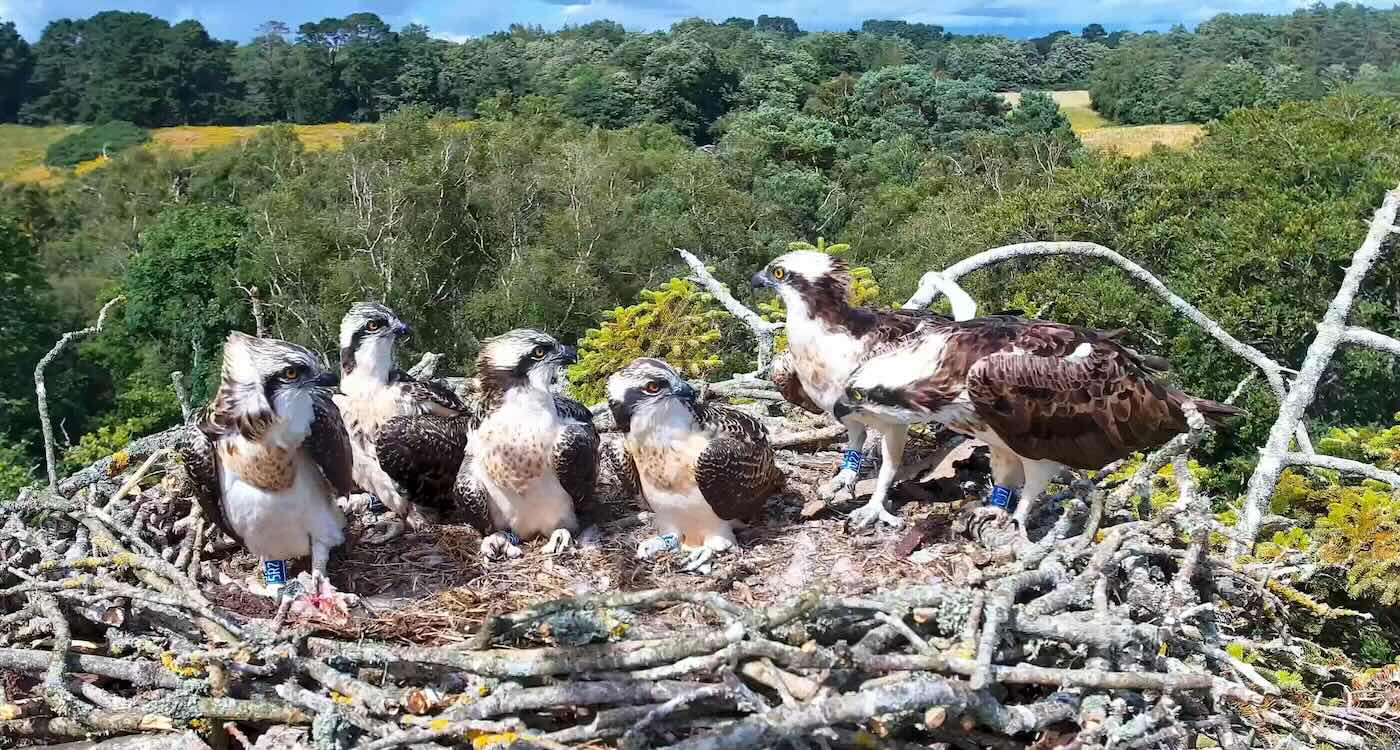
Ospreys are recovering in Britain thanks to a small number of "pioneering pairs" that choose to nest more than 12 miles (20 kilometers) away from the main population, according to research published in the Journal of Animal Ecology. The study, led by Bournemouth University PhD researcher Brittany Maxted with the charity Birds of Poole Harbour and the Roy Dennis Wildlife Foundation, analyzed a rare 54-year dataset of osprey recolonization in northern Scotland.
Ospreys typically prefer to nest near other ospreys, and most males exhibit natal philopatry, breeding close to their birthplace. These behaviors normally lead to very slow population spread for such a large bird. However, the researchers found that pioneering pairs settling in areas with no competition create separate subpopulations and increase the speed of recovery for the species.
The patterns observed in ospreys are very similar to other types of population expansion that have been better studied, such as invasive species. Study co-author Dr. Tim Mackrill, lead ornithologist at the Roy Dennis Wildlife Foundation, said the findings highlight how much spatial expansion relies on long-distance dispersal by rare pioneering individuals. The research suggests conservationists should encourage or replicate these movements to accelerate natural recovery rates.
Conservationists are already applying these insights by building artificial nests to entice ospreys into new areas and by physically moving individuals via translocation. Ospreys once bred across much of Britain but disappeared by 1916 due to hunting and egg collecting. A pair naturally returned to Loch Garten, Scotland, in 1954, sparking a conservation movement that Dr. Roy Dennis has led since the 1960s, producing the dataset used in the new study.
A key example is the Poole Harbour, Dorset, translocation project that ran from 2017 to 2022. The Roy Dennis Wildlife Foundation and Birds of Poole Harbour moved young ospreys from northern Scotland to Poole Harbour at seven weeks old. The first breeding pair there consisted of a translocated male from Scotland and a female that flew in from a population 124 miles (200 km) away, attracted by the presence of translocated chicks.
In 2022, that pair hatched two chicks, becoming the first breeding ospreys in southern England since 1847. Without translocation, researchers estimate it might have taken another 60 years for breeding ospreys to reach Dorset naturally. The original pair has returned to breed and produce chicks at the same nest each year since, hatching four chicks for the third consecutive year in 2024.
Several pioneering movements have already been recorded from the Poole Harbour population. A second pair is breeding away from the harbour, and the first wild-born Poole Harbour chick is now breeding in the East Midlands. Both pairs are forming new subpopulations and starting to close the gap between Poole Harbour and the nearest osprey population at Rutland Water. Artificial nests have already been built in neighboring counties like Devon and Hampshire.
The research team hopes their findings will motivate more conservation action for ospreys across Europe, where the species is still missing from much of its historical range. Dr. Mackrill said the findings reinforce that current restoration approaches are correct and should be used even more widely to see faster recovery across Europe.
Ospreys Recover Thanks to ‘Pioneering Pairs’ Who Nest Away From Main Population
This is an independent summary. The complete reporting, supporting context and any primary documents remain with Good News Network.