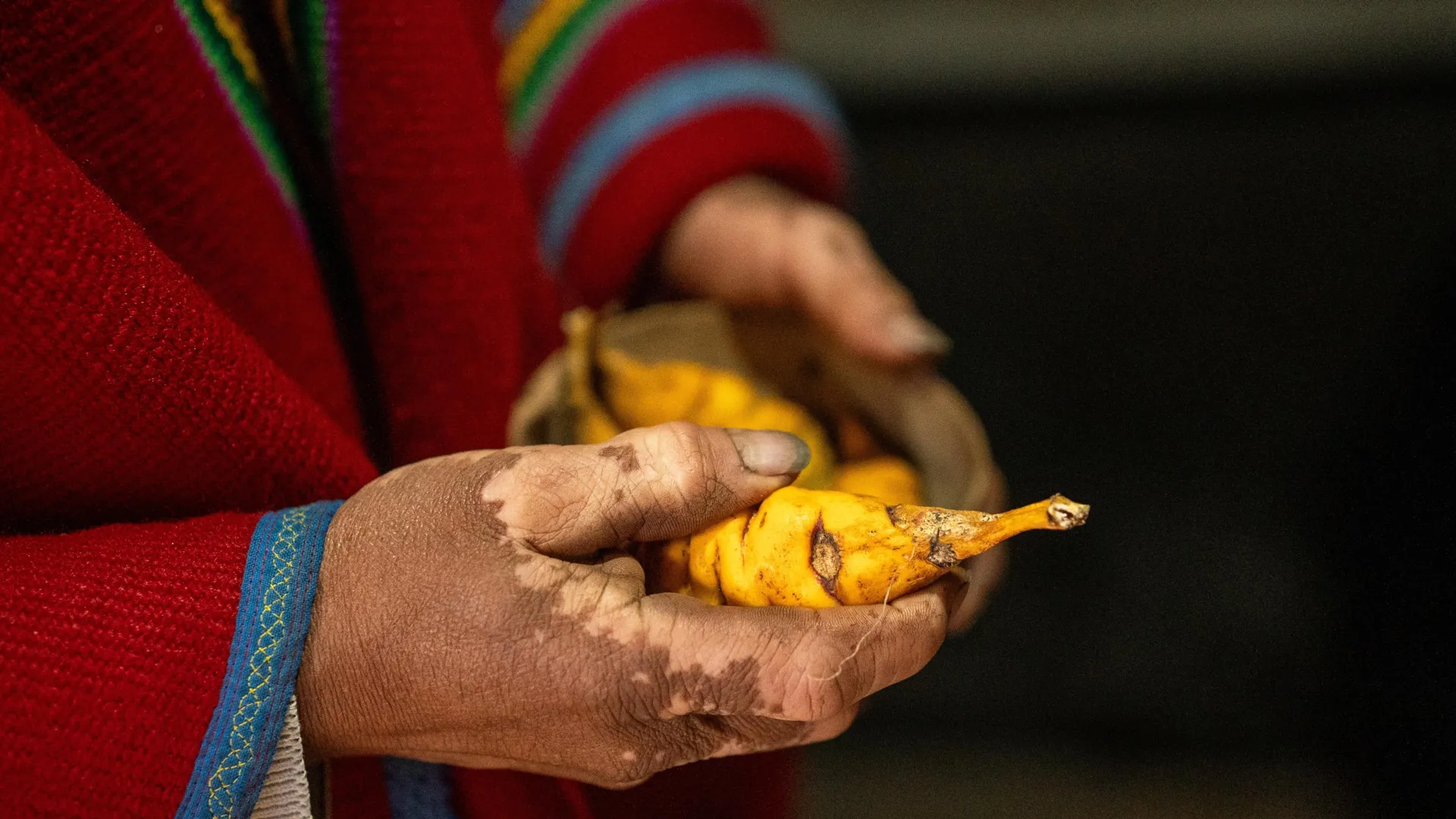
A study published in Nature Communications finds that Indigenous Quechua-speaking people in the Peruvian Andes carry an average of 10 copies of the salivary amylase gene AMY1, roughly two to four more copies than any of the other 83 populations examined. The gene codes for an enzyme that begins breaking down starch in the mouth, and higher copy numbers are associated with more efficient starch digestion.
Researchers from UCLA and the University at Buffalo, along with collaborators from multiple institutions, compared genomic data from Andean participants with global databases. They estimated that starting around 10,000 years ago — when potato cultivation became established in the highlands — individuals with 10 or more AMY1 copies gained a 1.24% survival or reproductive advantage per generation.
The team also compared Andean genomes with those of the Maya, an Indigenous population in Mexico that shares evolutionary history but lacks a tradition of potato farming. Andeans averaged 10 AMY1 copies versus six among the Maya, supporting a link between the crop and the genetic pattern.
A key challenge was ruling out the severe population bottleneck that followed European contact in the 15th century, which dramatically reduced Indigenous populations across the Americas. Using ultra-long DNA sequencing and new comparative datasets, the researchers determined that high AMY1 copy numbers had already become more common in the Andes several thousand years before Europeans arrived.
The findings indicate that natural selection acted on existing genetic variation rather than creating new mutations. Individuals with fewer AMY1 copies were gradually lost from the population over many generations, while those with higher copy numbers persisted.
Abigail Bigham, associate professor of anthropology at UCLA and co-corresponding author, said the Andes offer a rare case where evidence for diet-driven genetic adaptation is unusually strong. Omer Gokcumen, professor of biological sciences at the University at Buffalo and co-corresponding author, noted that biologists have long suspected such adaptations but have found few examples with comparable support.
The research was funded by the National Science Foundation, the National Institutes of Health, and the Leakey Foundation.
Potatoes may have given Indigenous Andeans a digestive superpower
This is an independent summary. The complete reporting, supporting context and any primary documents remain with ScienceDaily.