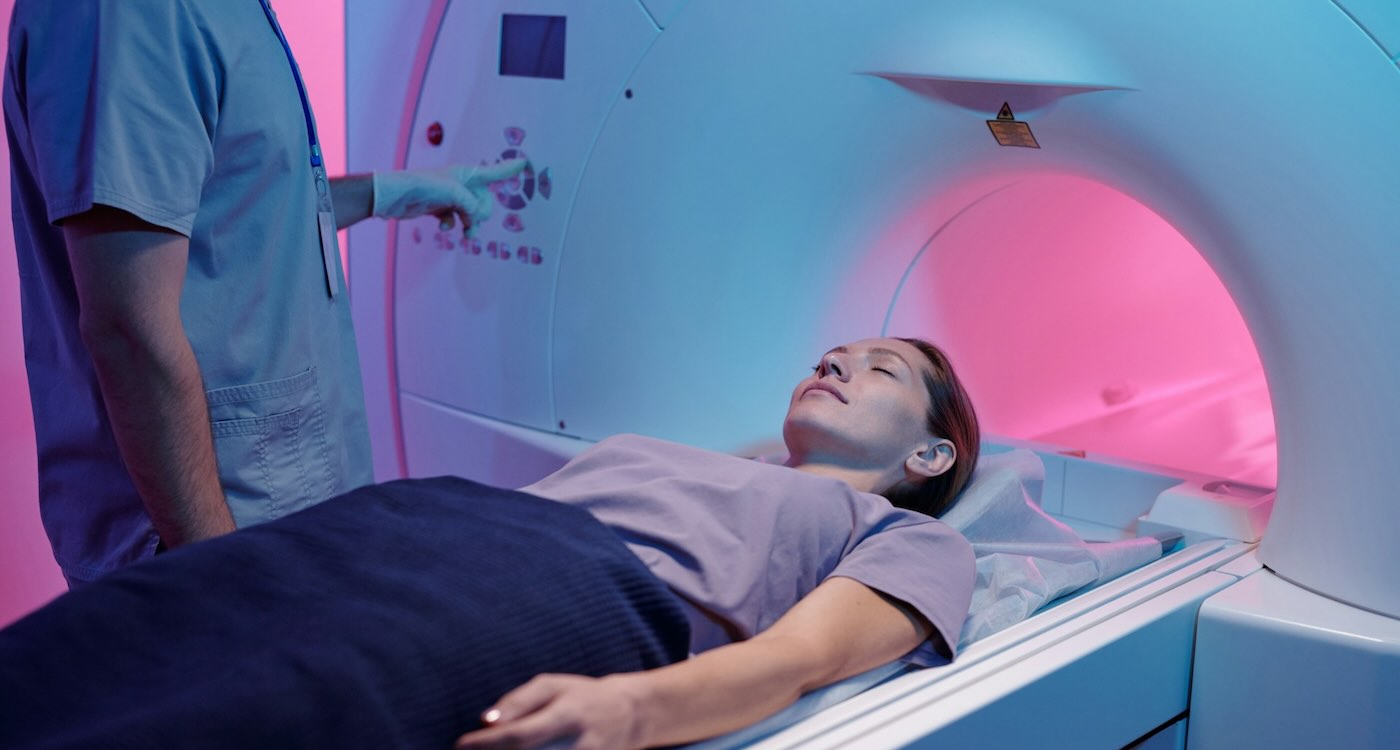
Scientists at the University of Sheffield's POLARIS research group have advanced a magnetic resonance imaging technique that uses hyperpolarized xenon-129 gas to produce detailed functional maps of children's lungs. Unlike computed tomography scans, the method does not expose patients to ionizing radiation, making it suitable for repeated monitoring of chronic conditions.
Conventional MRI struggles to image lungs because they are air-filled and in constant motion. The POLARIS team overcomes this by having patients inhale hyperpolarized xenon-129, which generates a strong MRI signal inside the lungs. Patients hold their breath for a few seconds while images are acquired, then exhale the gas.
The technique visualizes where air reaches within the lungs and, because some xenon dissolves into the bloodstream, also provides information on gas exchange between air and blood. Combined with other advanced MRI methods, clinicians can assess ventilation, perfusion, lung structure, and gas transfer in a single session.
In children with cystic fibrosis, the xenon MRI has identified ventilation abnormalities that were not detected on previous CT scans. Sheffield Children's Hospital is now using the method to detect early functional lung disease in these patients, which the university says is the first such clinical application in the United Kingdom.
The scan takes only a few minutes, and newer pulse sequences can acquire images in as little as four seconds, reducing the burden on young patients who may struggle to remain still. The POLARIS group is collaborating with GE HealthCare to develop hardware and software that would enable the technique on existing MRI scanners.
Researchers are also supporting new clinical sites worldwide with equipment and expertise to perform the scans. The collaboration aims to make the imaging method available to more patients with conditions such as cystic fibrosis, severe asthma, interstitial lung disease, and pulmonary vascular disorders.
The technology represents a shift from structural imaging to functional assessment without radiation exposure. For children who require lifelong monitoring, the ability to repeat scans without cumulative radiation risk addresses a longstanding clinical challenge.
New Radiation-Free Lung Scan Can Spot Disease Sooner in Children – And it’s Much Safer
This is an independent summary. The complete reporting, supporting context and any primary documents remain with Good News Network.