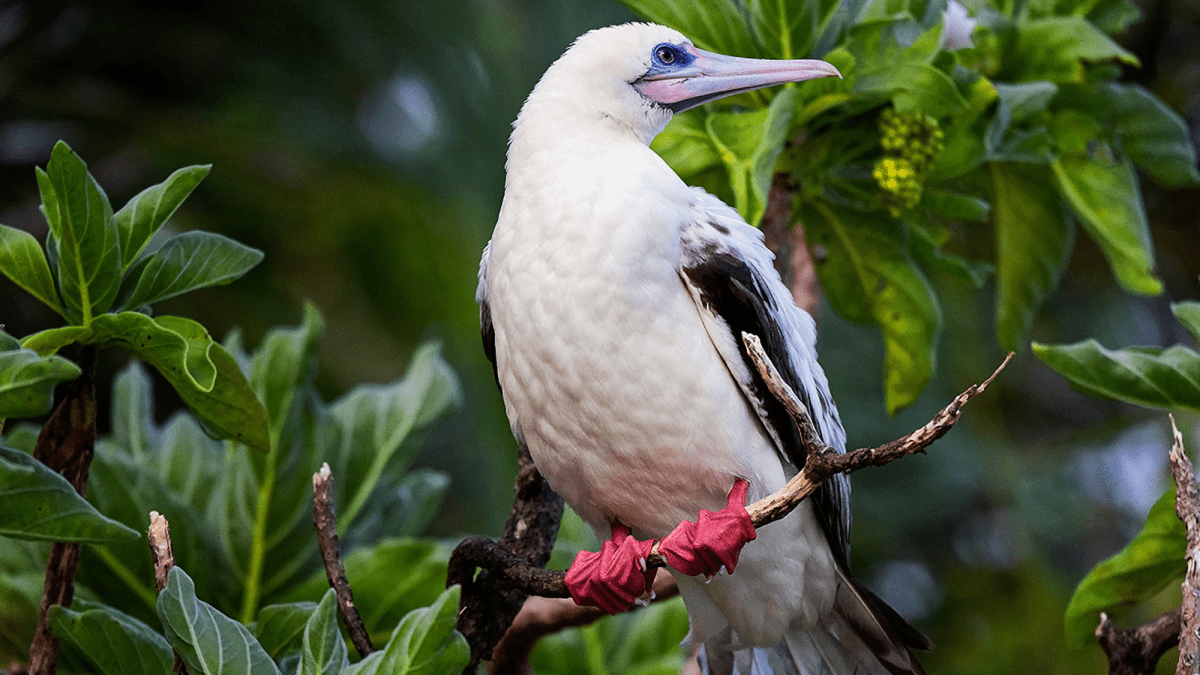
A red-footed booby was spotted off Thomas Point Park in Anne Arundel County, Maryland, in early summer 2026, marking only the second official record of the species in the state. The bird's typical range extends across the Pacific Ocean and into the Caribbean and West Indies, making its appearance on the Chesapeake Bay highly unusual.
Steve Sheffield, a field biologist at the University of Maryland and president of the Maryland Ornithological Society, said the bird was likely blown off course by a tropical storm. Red-footed boobies are known to wander far out of range, and increasingly abnormal weather patterns and warming ocean waters may make such sightings more frequent.
Witnesses reported the bird appeared comfortable around people, jumping from boat to boat and landing along the shoreline during its stay in late June. The booby has not been seen since that period.
Shortly after, birders observed a brown booby, a close relative of the red-footed booby, visiting boats and buoys around the Chesapeake in July. While brown boobies are slightly more common in the region, the back-to-back visits generated significant excitement among local avian enthusiasts.
Sheffield noted that warming temperatures have led several southern species to establish breeding populations in Maryland, including anhingas, brown pelicans, and some bat species. These shifts are changing local ecosystems in ways that are not yet fully understood.
Unlike those species, neither the red-footed nor the brown booby appears to be putting down roots in the area. Both birds moved on after brief visits, underscoring the transient nature of such vagrant sightings.
Sheffield described the unpredictability of field biology as a daily thrill, comparing the experience of spotting an unexpected rare bird to Christmas morning.
The red-footed booby is the smallest of the booby species and displays a wide variety of color phases, distinguished by its red legs and feet and pale blue bill.
Rare tropical red-footed booby spotted in Maryland
This is an independent summary. The complete reporting, supporting context and any primary documents remain with Popular Science.