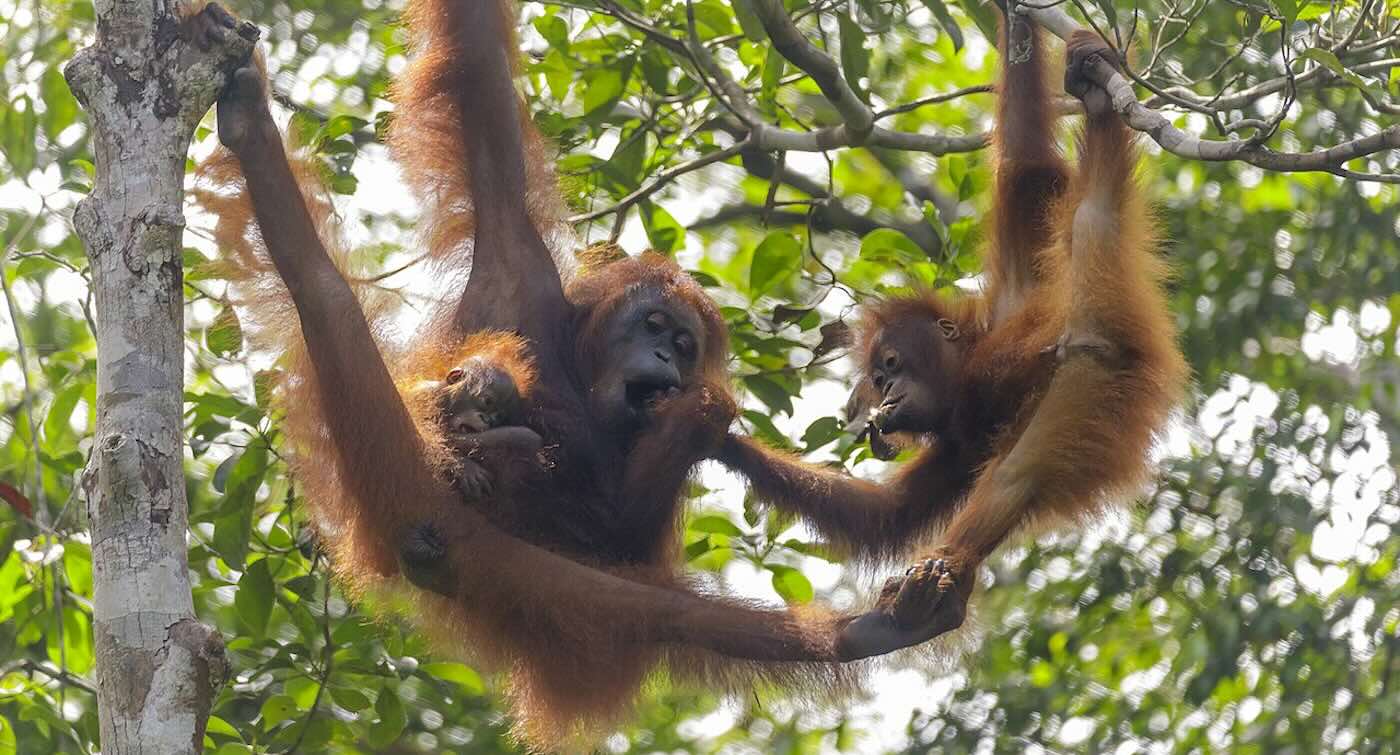
Fifteen years ago, the Sumatran Orangutan Conservation Program began releasing rehabilitated orangutans into the Jantho Pine Forest Nature Reserve in Indonesia's Aceh province. The reserve offered a large, protected habitat where no Sumatran orangutans were previously living, providing a site away from some of the immediate pressures the species faces elsewhere.
The released animals included individuals orphaned at a young age, rescued from conflict situations, or recovered from captivity. Many required months or years of rehabilitation to learn survival skills such as foraging, nest-building, and canopy navigation that they would normally acquire from their mothers over several years.
Conservationists only released orangutans after they demonstrated the ability to forage, climb, build nests, and survive without human assistance. Since 2011, nearly 200 Sumatran orangutans have been brought to Jantho through this process.
In recent years, several released females have given birth in the reserve. Researchers have confirmed at least 10 infants born in the wild, meaning these babies were not released from captivity but entered the population as wild-born individuals.
The births are significant because Sumatran orangutans have one of the longest inter-birth intervals of any mammal; mothers typically raise a single infant for years before producing another. This slow reproductive rate means populations cannot rebound quickly, making each wild birth a notable addition.
The Jantho project demonstrates how individual rehabilitation efforts can scale into population-level recovery. What began as a site for releasing rescued animals has become a location where a new generation of wild Sumatran orangutans is being raised by mothers who themselves were once in human care.
The Sumatran orangutan (Pongo abelii) is classified as critically endangered. The establishment of a viable, reproducing population in a protected reserve represents a measurable step toward the species' conservation in the wild.
Rescued Orangutans Released Into Isolated Forest Are Now Raising Babies, Creating New Wild Population
This is an independent summary. The complete reporting, supporting context and any primary documents remain with Good News Network.