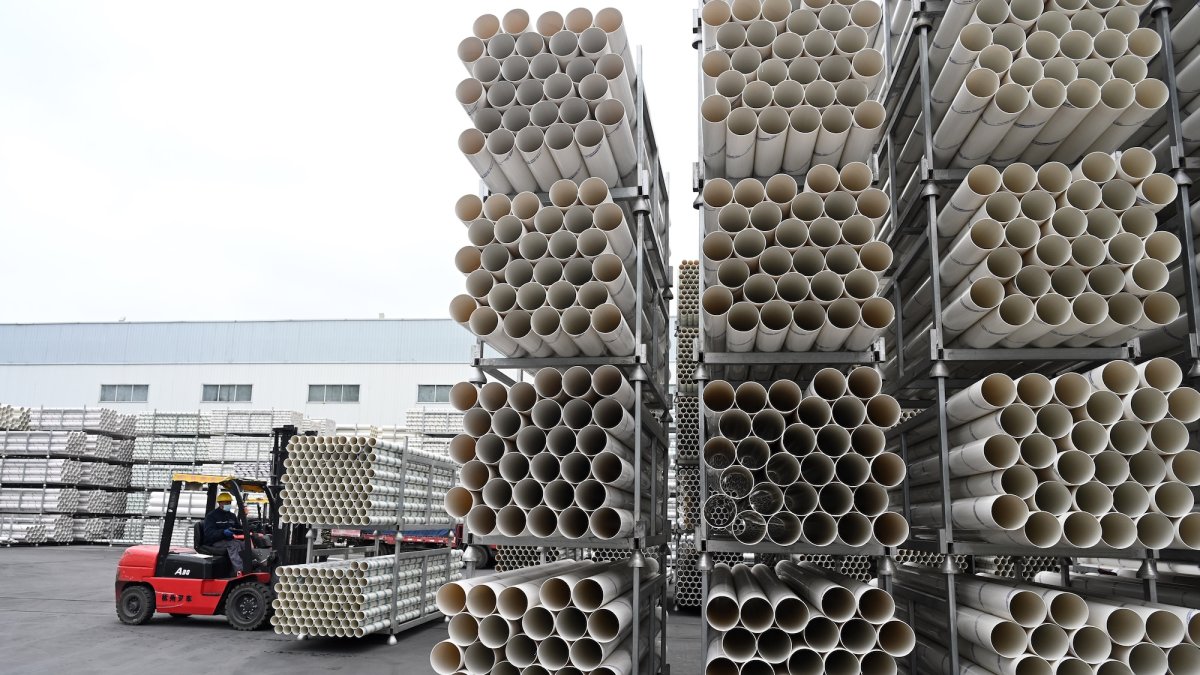
Polyvinyl chloride, or PVC, is one of the world's most widely used plastics, with roughly 40 million tons produced annually for pipes, cable insulation, bottles and credit cards. Its high chlorine content and numerous additives make it extremely difficult to recycle, so most PVC ends up in landfills.
Chemical engineers at Virginia Tech, led by Guioliang "Greg" Liu, have demonstrated a process that breaks down PVC and repurposes it as a key ingredient for industrial lubricants. The study was recently published in the journal Nature.
The method places PVC in a solvent with aluminum trichloride and alpha-olefins, then heats the mixture for three hours at 158 degrees Fahrenheit. This strips chlorine atoms from the polymer chains and yields a thick oil suitable for lubricant formulations.
Early attempts produced a soft, gooey material that could not meet the performance requirements of existing industrial lubricants. Liu said the breakthrough came when the team decided to continue breaking the polymer chains into smaller segments that mimic the molecular structure of conventional lubricant base oils.
The resulting product is described as a comparatively eco-friendly oil that could serve the next generation of industrial lubricants. Graduate student Adrian DiMarco has prepared engine oil samples from the upcycled material in the lab.
The researchers are now working to make the process more sustainable, scalable and affordable for general use. Liu noted that lubricants are ubiquitous but often overlooked components in machinery and transportation.
Hard-to-recycle PVC turned into sustainable lubricant
This is an independent summary. The complete reporting, supporting context and any primary documents remain with Popular Science.