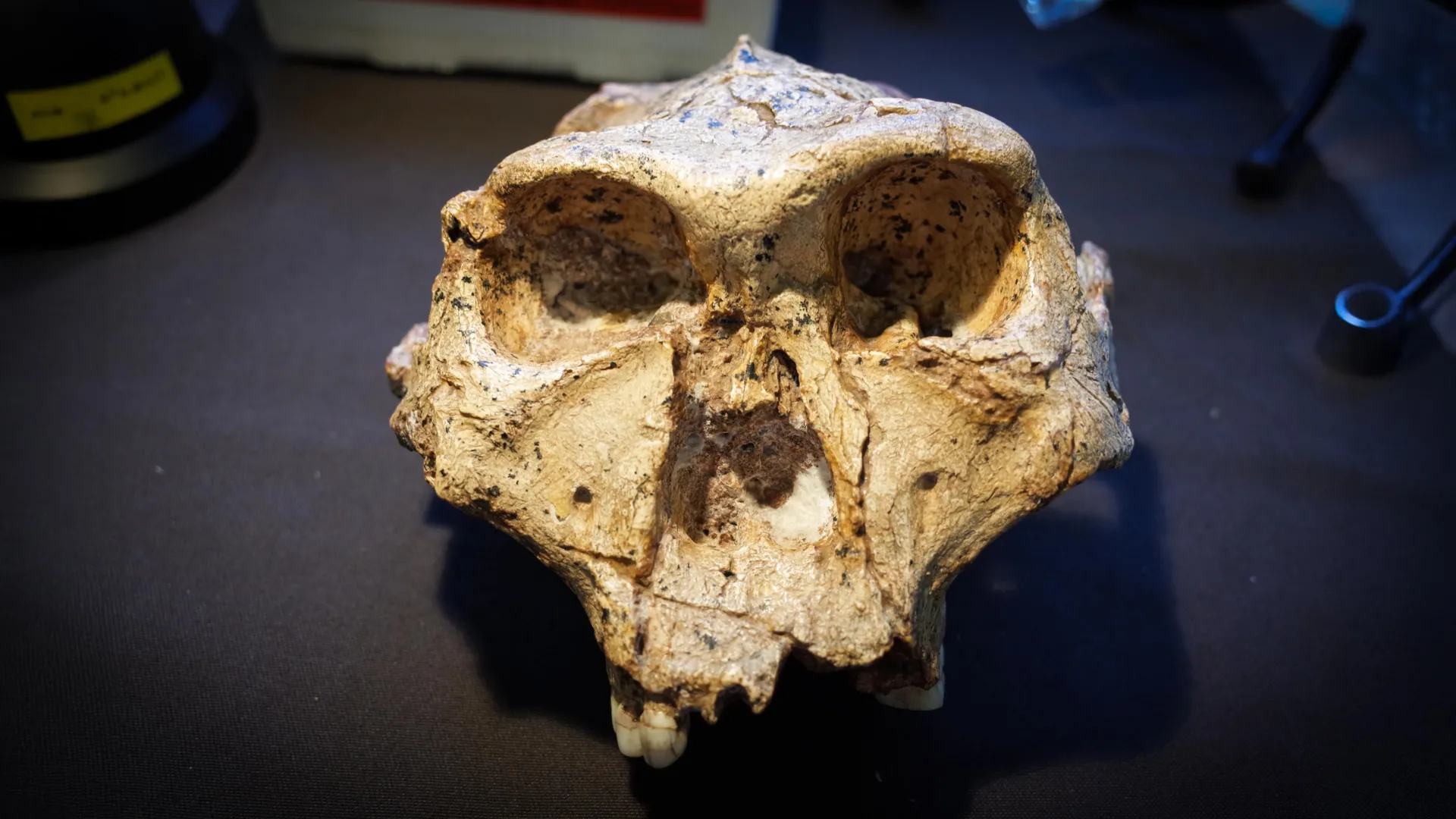
Researchers at Monash University have proposed a major revision to the way scientists classify early human ancestors, arguing that the genera Australopithecus and Paranthropus should be folded into Homo.
The proposal, published in the American Journal of Biological Anthropology, is based on recent fossil discoveries and advances in evolutionary analysis that have made the anatomical and behavioral distinctions between these groups increasingly difficult to maintain.
Lead author Dr. Ian Towle, a Research Fellow at the Monash Biomedicine Discovery Institute, said the traditional taxonomy no longer accurately reflects the complex, non-linear relationships revealed by the growing fossil record.
Historically, Homo has been defined by traits such as large brains and advanced tool use, but scientists now know that some early Homo species had very small brains, while evidence suggests Australopithecus and Paranthropus were capable of complex behaviors.
Modern taxonomy increasingly seeks to group organisms into clades — groups containing a common ancestor and all its descendants — yet human evolution has been slower to adopt this approach.
Dr. Towle argues that expanding Homo to include these relatives would create a more stable classification system, reducing the need to repeatedly redefine groups as new fossils are uncovered.
The research does not describe new fossil finds but rather a re-evaluation of existing evidence and taxonomic philosophy.
The journal article, titled "Clades, Grades, and the Genus Problem: A Case for Revising Hominin Taxonomy," was published in 2026.
Scientists say the human family tree may need a major rewrite
This is an independent summary. The complete reporting, supporting context and any primary documents remain with ScienceDaily.