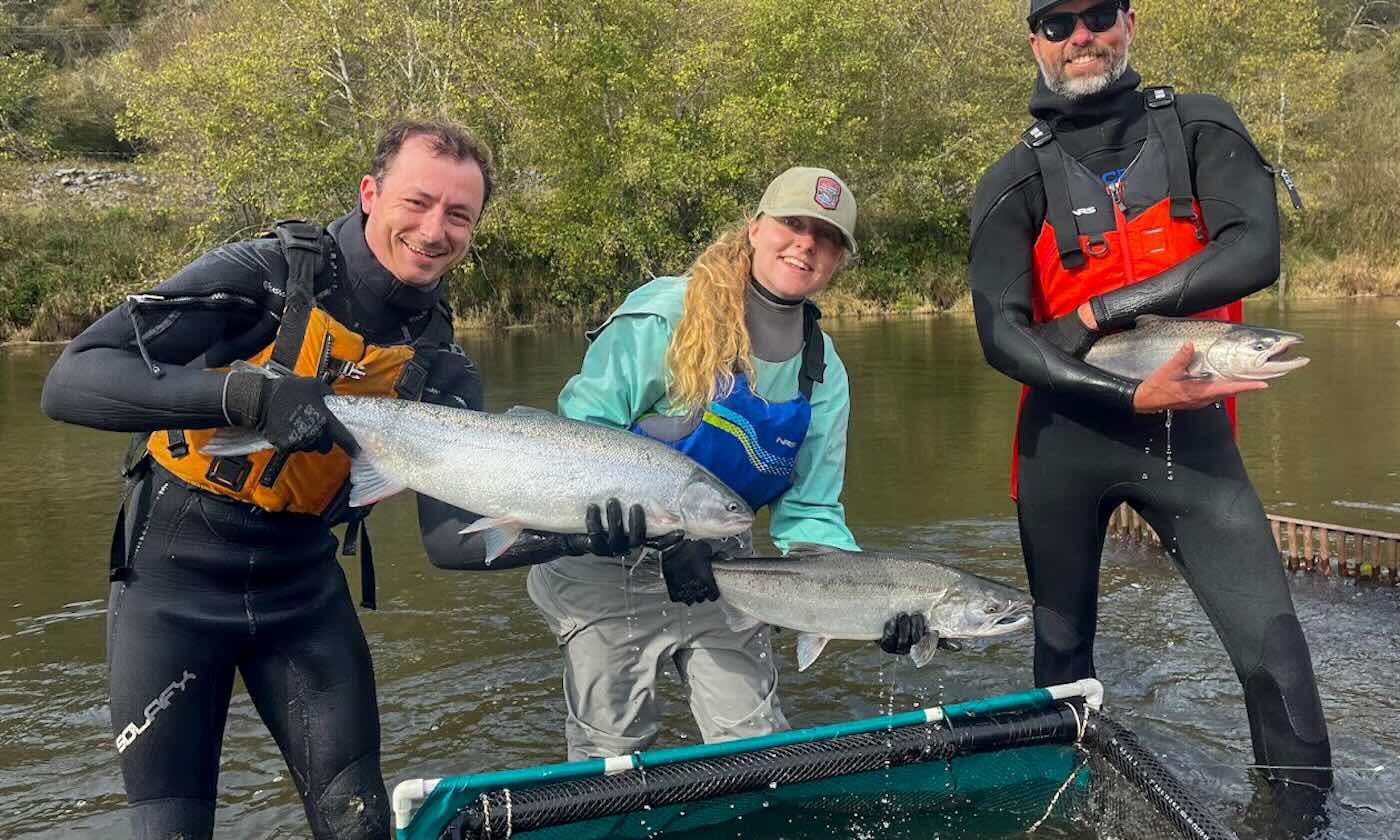
Conservation partners led by NOAA Fisheries have spent more than ten years converting a former lumber-mill site on Prairie Creek, a tributary of Redwood Creek on California's north coast, into a functioning floodplain with wetlands, ponds and side channels.
The creek is one of the last strongholds for three threatened salmonids: California Coastal Chinook, Northern California steelhead and coho salmon, whose populations fell roughly 90 percent over the past century.
Researchers from Cal Poly Humboldt tagged juvenile fish with passive integrated transponders and tracked their growth, movement and survival before, during and after construction.
Fish biologist Carter Adamson of the Pacific States Marine Fisheries Commission reported that in some sites and years juveniles using the restored habitat grew up to twice as fast as those remaining in the main channel.
Faster growth in fresh water is linked to higher survival during ocean migration and a greater likelihood of returning to spawn as adults.
NOAA's preliminary data for the 2023 coho cohort show a 2.6 percent ocean-to-adult return rate, compared with a historical estimate of about 1 percent.
Monitoring is funded through at least 2028 to determine whether the early gains persist across varying ocean conditions.
The project illustrates how reconnecting a stream to its floodplain can restore the slow-water, food-rich habitat that juvenile salmon need to thrive.
California Creek Restoration Helps Young Salmon Grow Twice as Fast—And Doubles Their Survival Rate
This is an independent summary. The complete reporting, supporting context and any primary documents remain with Good News Network.