A study published in Nature identifies experience-dependent plasticity in parvalbumin-expressing inhibitory neurons (PV INs) as a convergent mechanism disrupted across multiple neurodevelopmental disorders. The research focused on the dentate gyrus–CA3/CA2 circuit of the hippocampus, where PV INs precisely control pyramidal neuron activity through feedforward inhibition.
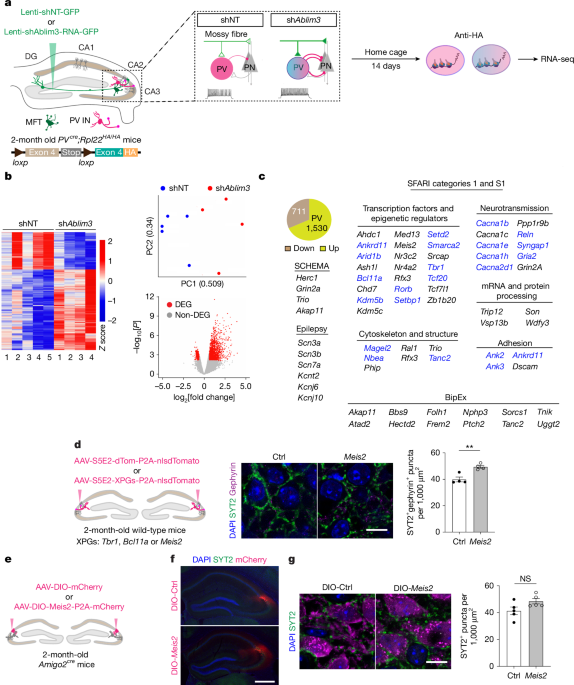
Using an input-specific translatome screen in adult mice, researchers identified candidate experience-dependent PV IN plasticity genes (XPGs). A substantial proportion of these upregulated genes showed haploinsufficiency in autism spectrum disorder, epilepsies, bipolar disorder, and schizophrenia, suggesting impaired PV IN plasticity is a shared feature of these conditions.
In proof-of-concept experiments, the team targeted the homeobox gene Meis2, a candidate XPG, for upregulation in CA3/CA2 PV INs of an NDD risk mouse model. This intervention was performed in adulthood, well after the developmental period when neural circuitry is highly sensitive to experience.
The targeted upregulation of Meis2 was sufficient to restore experience-dependent PV IN plasticity in the adult mice. This restoration led to improvements in ensemble and sharp-wave ripple properties, which are physiological markers of hippocampal network function.
Cognitive performance improved in the treated mice, and seizures were suppressed. The findings demonstrate that developmental deficits in circuitry, network excitability, and cognition can be reversed by reinstating PV IN plasticity in adulthood.
The study establishes experience-dependent PV IN plasticity as a convergent mechanism for diverse NDD risk genes. It provides evidence that targeting this plasticity mechanism in adulthood may offer a therapeutic strategy for conditions characterized by network hyperexcitability and cognitive impairment.
Procognitive restoration of PV neuron plasticity in neurodevelopmental disorders
This is an independent summary. The complete reporting, supporting context and any primary documents remain with Nature.