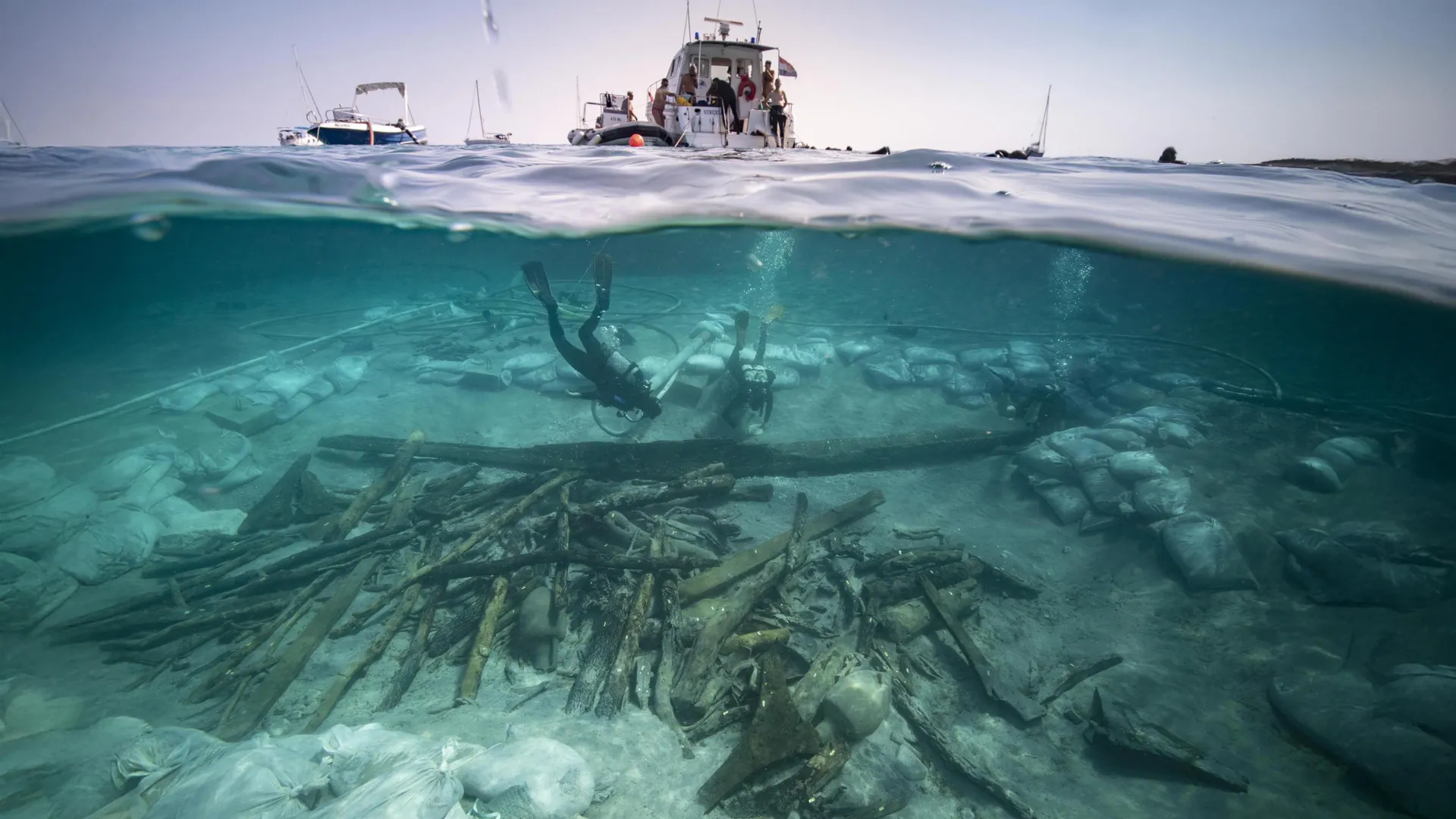
Researchers from France and Croatia have analyzed the protective coatings on the Roman Republic-era shipwreck Ilovik-Paržine 1, which sank roughly 2,200 years ago off the coast of present-day Croatia. The study, published in Frontiers in Materials, combined mass spectrometry and palynology to identify the composition and geographic origins of the hull's waterproofing layers.
All ten coating samples were dominated by heated coniferous resin or tar, commonly called pitch. One sample contained a distinct mixture of pine tar and beeswax, a formulation known to Greek shipbuilders as zopissa that improves flexibility and ease of application when heated.
Because pitch is naturally sticky, it trapped pollen from the surrounding vegetation at the time each coating was produced or applied. The pollen assemblages include taxa typical of Mediterranean and Adriatic coasts and valleys — such as holly oak, pine, olive, and hazel — as well as alder and ash associated with riverbanks and seashores, and smaller amounts of fir and beech linked to the mountainous terrain of the north-eastern Adriatic.
The pollen evidence indicates that the vessel received four to five separate batches of coating over its lifetime. The stern and central hull sections share the same coating material, while the bow shows three distinct batches, suggesting repeated repairs using materials sourced from different locations around the Adriatic basin.
Earlier ballast studies had pointed to Brundisium (modern Brindisi, Italy) as the ship's construction site. The new pollen data suggest some coatings may have been applied there, while others were likely added along the north-eastern Adriatic coast near where the wreck was ultimately discovered.
Lead author Dr. Armelle Charrié-Duhaut, an archaeometrist at the Laboratory of Mass Spectrometry of Interactions and Systems in Strasbourg, noted that organic waterproofing materials have received little attention in archaeology despite being essential to ancient naval technology. The combined molecular and pollen approach provides a new way to document shipbuilding traditions and vessel life histories.
2,200-year-old Roman shipwreck reveals ancient waterproofing secrets
This is an independent summary. The complete reporting, supporting context and any primary documents remain with ScienceDaily.