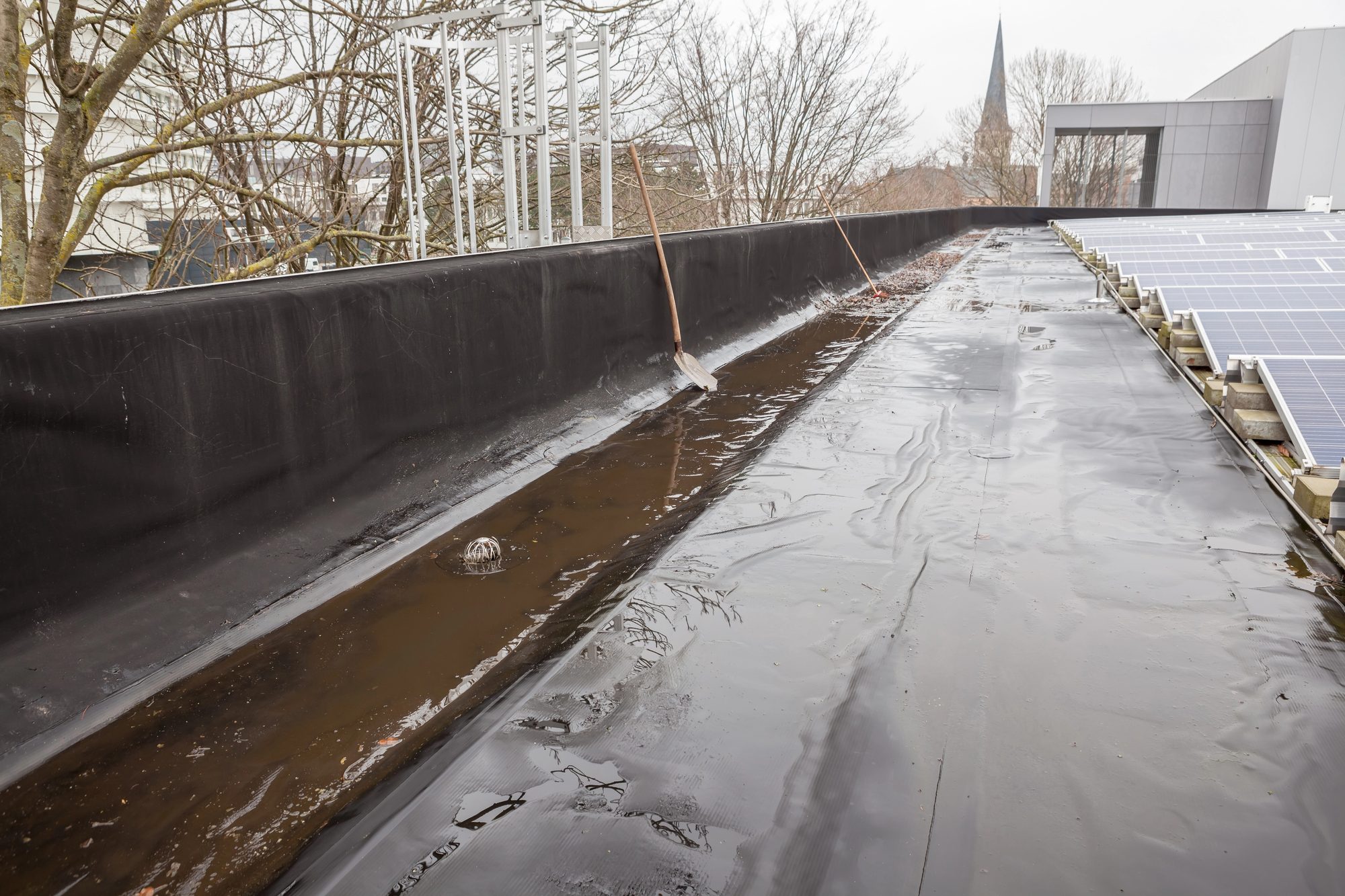
Researchers at the University of Manchester have modeled how rooftop rainwater harvesting combined with evaporative cooling could reduce the energy demand of air conditioning while also lowering surrounding outdoor temperatures.
Air conditioning units cool indoor spaces by expelling heat outdoors, which raises ambient temperatures and drives further cooling demand — a feedback loop that intensifies urban heat.
The study simulated the effect of storing rainwater on rooftops and using it in evaporative cooling systems that pre-cool air before it enters conventional air conditioners, reducing the electricity those units consume.
Because the evaporation process also releases moisture and cools the immediate rooftop environment, the modeling shows a measurable decrease in local outdoor temperatures when the approach is deployed at scale.
The researchers note that the potential benefit depends on climate, rainfall patterns, building density, and the design of the storage and distribution system, and that real-world pilot projects are needed to validate the simulations.
The work adds to a growing body of research on passive and hybrid cooling strategies that aim to reduce reliance on energy-intensive mechanical cooling in dense urban areas.
Findings were published in a peer-reviewed journal and presented as a contribution to urban climate adaptation planning.
Further research will examine integration with existing building infrastructure and long-term water quality management in rooftop storage.
Rooftop rainwater could break cities’ air conditioning trap
This is an independent summary. The complete reporting, supporting context and any primary documents remain with The Optimist Daily.