A partial solar eclipse will be visible across the UK on Wednesday evening, the most significant such event since 1999, while parts of Spain, Greenland and Iceland will experience a total eclipse.
The Royal Astronomical Society warns that looking directly at the Sun without certified eclipse glasses can cause serious eye damage, and ordinary sunglasses or dark goggles do not provide sufficient ultraviolet protection.
With many retailers sold out of glasses and online orders unlikely to arrive in time, experts have outlined three projection methods that use common household materials.
A simple pinhole projector can be made by piercing a small hole in a piece of card with a ballpoint pen; holding the card up to the Sun with a sheet of paper behind it casts a miniature image of the eclipse onto the paper.
A kitchen colander works on the same principle: held up to the Sun with a piece of paper behind it, the multiple holes create dozens of simultaneous eclipse images, a technique favoured by consultant ophthalmologist David Jones of the Royal Cornwall Hospitals Trust.
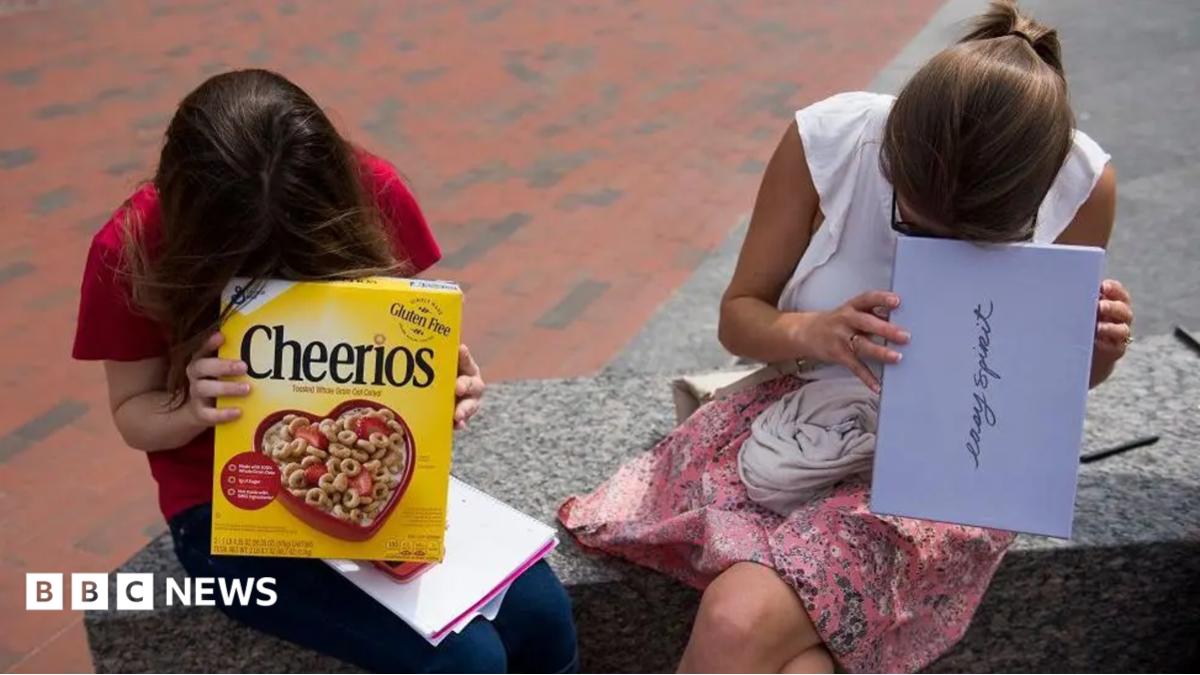
A more refined pinhole viewer can be built from an empty cereal box, aluminium foil, tape and a pin; the box blocks ambient light, producing a clearer projected image on a paper screen at the bottom.
NASA advises against pointing a mobile phone camera directly at the Sun without a special solar filter, as the sensor can be damaged, particularly if a magnifying lens attachment is used.
The Royal Astronomical Society recommends viewing from an elevated location with a clear western horizon, as the eclipse will occur low in the evening sky.
Three ways to watch the solar eclipse safely without glasses
This is an independent summary. The complete reporting, supporting context and any primary documents remain with BBC News.