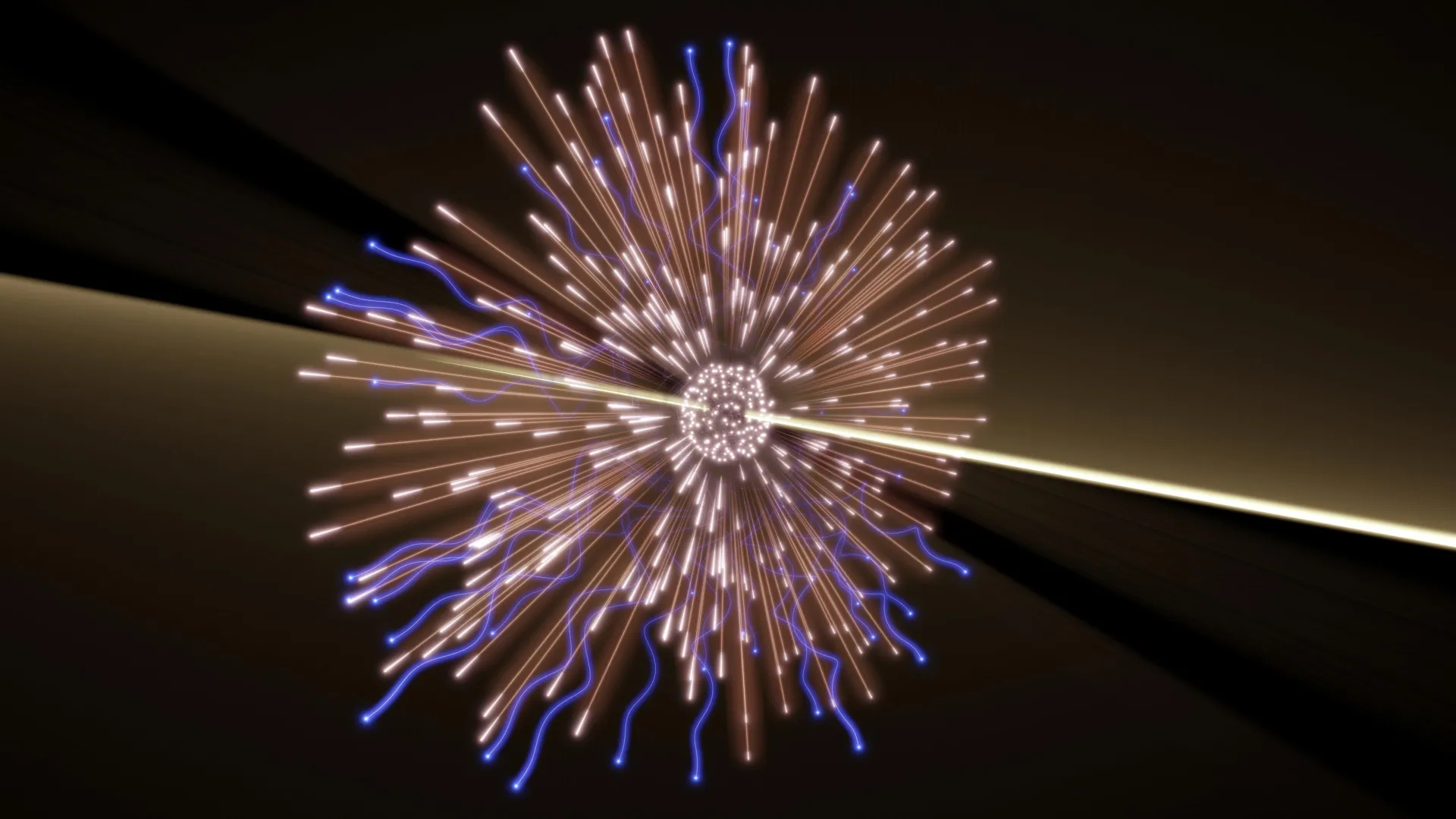
Researchers with the Double Chooz collaboration have detected antineutrinos emitted by a nuclear reactor after it was fully shut down, marking the first direct measurement of this residual signal. The experiment is located about 400 meters from the two reactor cores at the Chooz nuclear power plant in northern France.
The detector contains more than 30 cubic meters of liquid scintillator that produces tiny flashes of light when an antineutrino interacts with it. A characteristic double-light signal allows scientists to distinguish antineutrino events from background radiation.
Data were collected over 17.2 days while both reactor units were offline. During that period the detector recorded roughly 100 antineutrino candidate events attributed to radioactive decay in the reactor cores and in nearby spent-fuel cooling pools.
The measured signal closely matched detailed simulations that accounted for the remaining nuclear fuel inventory and the decay of long-lived fission products. The result provides the first experimental confirmation of theoretical predictions for antineutrino emissions from shutdown reactors and spent fuel.
Antineutrino detectors have previously focused on operating reactors, where the flux is much larger. Detecting the much weaker afterglow required exceptionally low backgrounds and analysis techniques developed by the collaboration over many years, according to lead researcher Anthony Onillon of the Max Planck Institute for Nuclear Physics.
Other experiments are beginning to explore this area. Initial results from JUNO-TAO, presented at Neutrino 2026, also use reactor-off data to study the faint antineutrino signal from spent nuclear fuel.
The findings suggest that antineutrino detectors could eventually provide independent information on reactor status and spent-fuel inventories during maintenance and after shutdown, adding a potential tool for nuclear safety and safeguards.
Double Chooz was originally built to study neutrino oscillations and played a key role in measuring the neutrino mixing angle theta-13, a fundamental parameter in particle physics. The new measurement adds a further scientific first to the experiment's record.
Scientists detect a nuclear reactor’s ghostly afterglow for the first time
This is an independent summary. The complete reporting, supporting context and any primary documents remain with ScienceDaily.