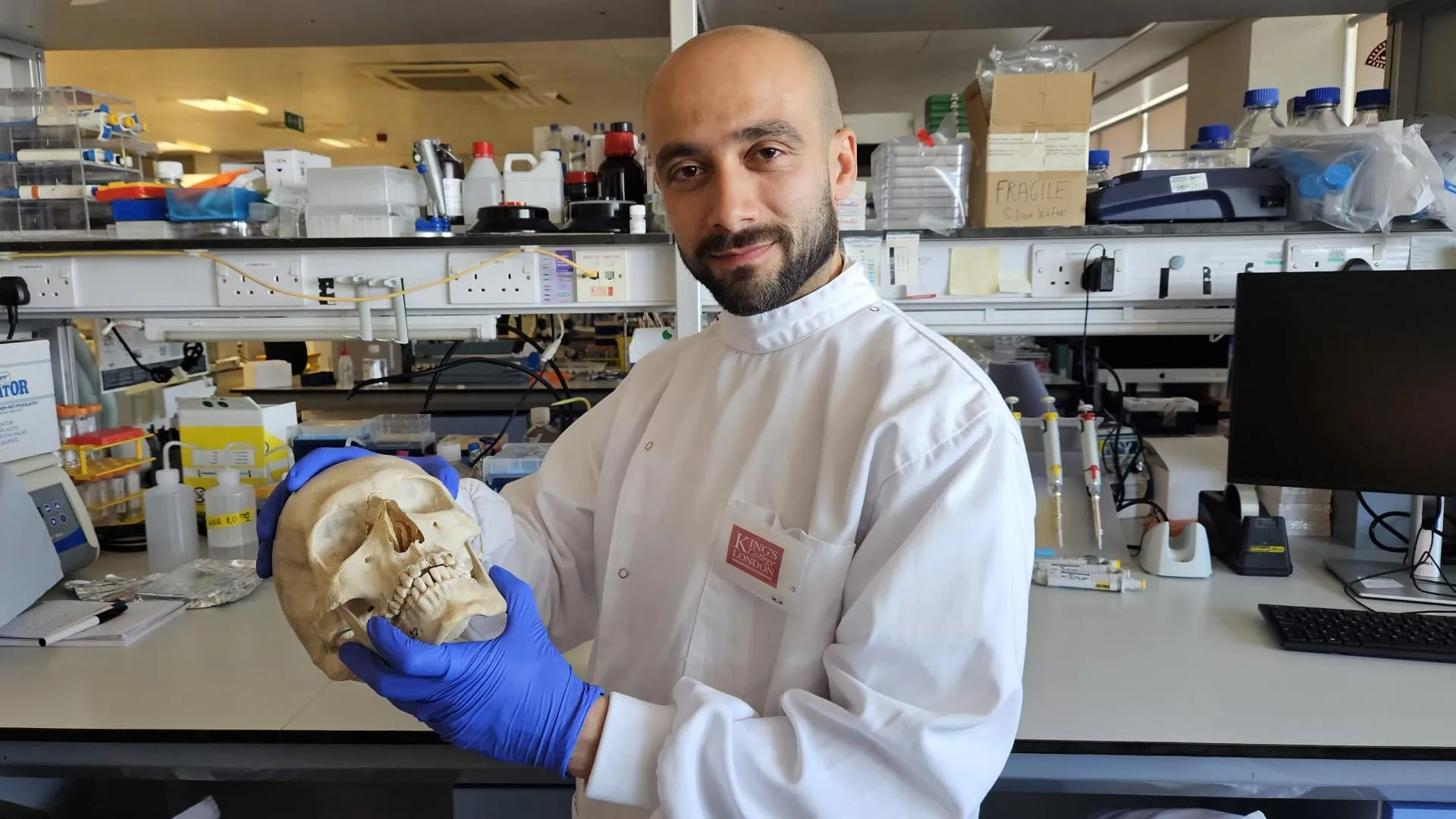
Scientists at King's College London have demonstrated that keratin extracted from sheep's wool can serve as an effective scaffold for bone regeneration. The research team, led by Dr. Sherif Elsharkawy at the Faculty of Dentistry, Oral & Craniofacial Sciences, chemically treated wool-derived keratin to create stable membranes designed for medical use.
In laboratory tests, human bone cells grew well on the keratin membranes and showed markers associated with healthy bone formation. The researchers then implanted the membranes into rats with critical-size skull defects that would not heal on their own, tracking bone growth over several weeks.
The results revealed a significant difference between the wool-based material and conventional collagen scaffolds. While collagen membranes generated a greater total volume of bone, the tissue formed with keratin scaffolds was more organized and structurally similar to natural, healthy bone, with better-aligned fibers.
The keratin membranes also remained stable throughout the healing process and integrated smoothly with surrounding tissue. Both stability and integration are considered essential characteristics for any material intended for clinical bone repair applications.
Collagen has been the gold-standard scaffold material in regenerative medicine for decades, but it has drawbacks including relative weakness, rapid degradation, and complex, costly extraction. Wool, by contrast, is an abundant agricultural byproduct often discarded as waste, offering a potentially renewable and scalable alternative source.
Dr. Elsharkawy described the successful animal testing as a major milestone that positions keratin as a potential new class of regenerative biomaterial. The demonstration in a living biological system moves the technology significantly closer to potential use in human patients, though further research will be needed before clinical application.
Scientists turn sheep’s wool into a material that helps regrow bone
This is an independent summary. The complete reporting, supporting context and any primary documents remain with ScienceDaily.