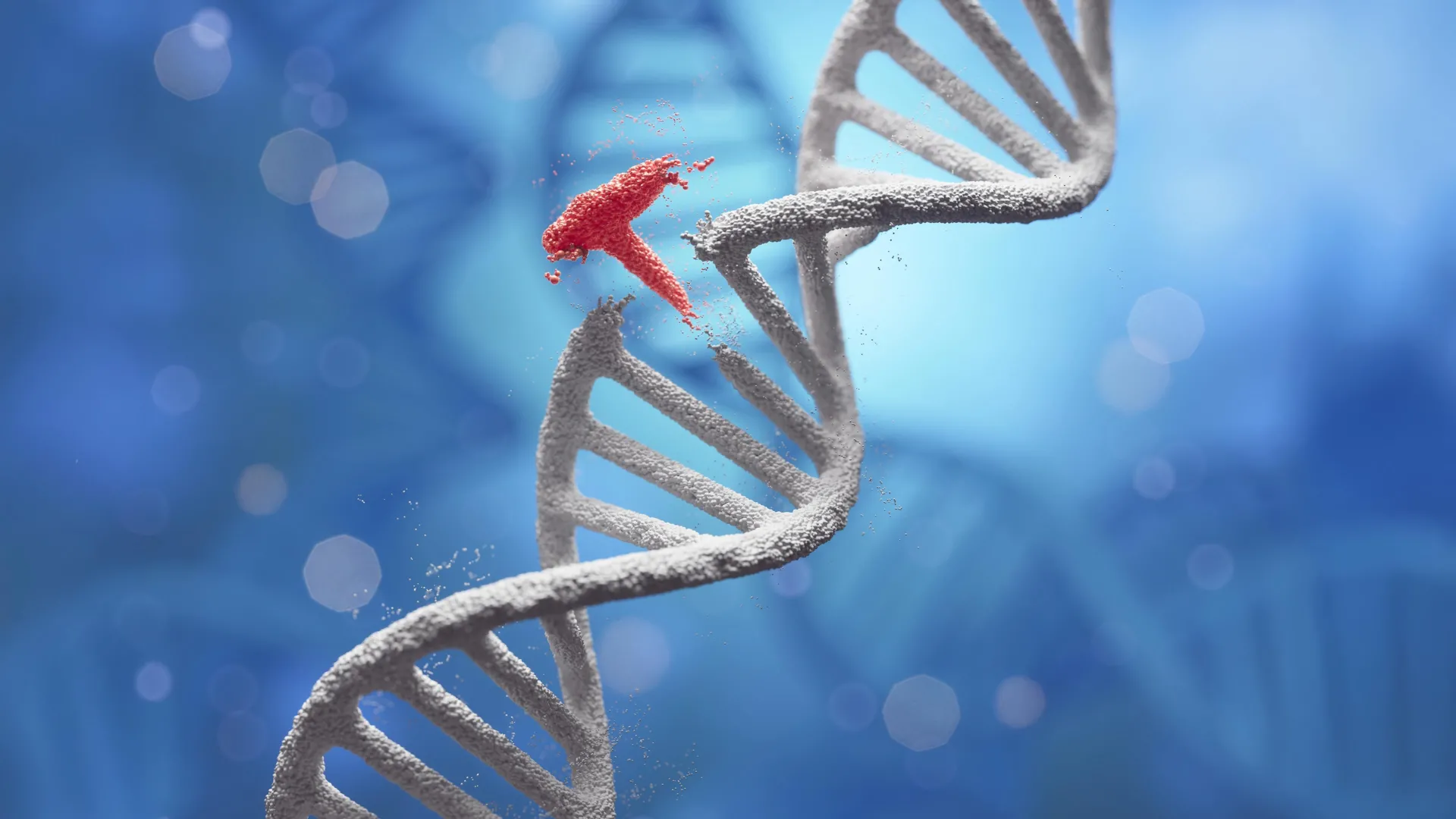
A team led by Professor Hiroshi Abe and Assistant Professor Masahito Inagaki at Nagoya University, with Professor Natsuhisa Oka at Gifu University, has demonstrated that silver nanoparticles can replace restriction enzymes for cutting DNA at targeted locations. The study was published in Nucleic Acids Research.
Conventional DNA assembly relies on restriction enzymes that recognize only certain sequences and typically generate short sticky ends of about four bases, limiting joining efficiency to roughly 8% when using T4 DNA ligase. The researchers revisited a 1990s reaction in which silver ions cleave 3'-thiol-modified DNA, but found that ions caused nonspecific binding and precipitation, recovering only about 14% of DNA.
Switching to silver nanoparticles allowed separation by centrifugation, yet initial tests required temperatures of 70–95°C that risk damaging long DNA molecules. Coating the nanoparticles with polyethylene glycol (PEG) improved stability and dispersion, achieving 92% cleavage efficiency at 37°C over 31 hours and over 91% at 50°C within one to two hours.
The PEG-coated nanoparticles also acted as a built-in purification step: unwanted fragments remained bound to the particle surfaces while desired fragments with sticky ends stayed in solution, raising final DNA recovery from 14% to 98%.
Using the nanoparticles, the team produced DNA fragments with 8-base sticky ends and, with longer 18-base overhangs, reached a joining efficiency of 44% — a fivefold improvement over the 8% efficiency of conventional 4-base overhangs.
To validate the method in a biological context, the researchers assembled a DNA fragment encoding green fluorescent protein (GFP) and introduced it into human HeLa cells, which successfully expressed GFP, confirming accurate assembly.
The researchers say the technique could simplify construction of large DNA sequences for gene therapies, cancer vaccines, engineered protein drugs, and advanced crops. Their next step is to test whether multiple fragments can be joined simultaneously, a prerequisite for genome-scale DNA synthesis.
Japanese scientists use tiny silver particles to make DNA assembly up to 5x more efficient
This is an independent summary. The complete reporting, supporting context and any primary documents remain with ScienceDaily.