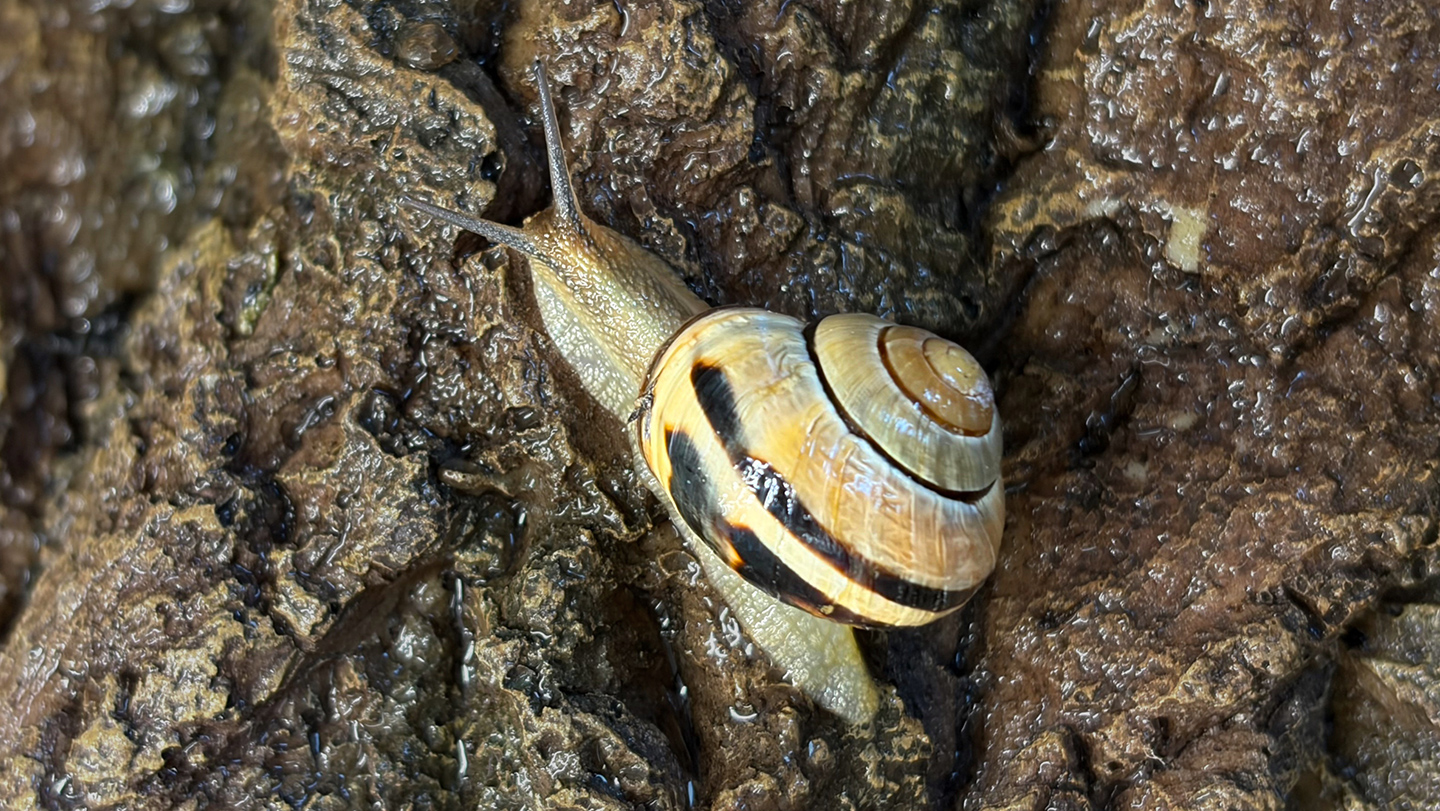
Researchers at the Max Planck Institute of Colloids and Interfaces have discovered that grove snails (Cepaea nemoralis) produce five distinct types of mucus by varying the amount and form of calcium they incorporate into a shared protein base. The study, published August 6 in Science, identifies lubricating mucus for locomotion, an iridescent adhesive for sticking to surfaces, a stiff epiphragm that seals the shell during hibernation, and two defensive secretions — a bubbly foam and a thick yellow mucus.
Chemical analysis showed that the same structural proteins, dominated by a form of collagen, appear across all five mucus types, but protein concentrations differ, with the defensive slimes containing the most. The most dramatic variation was in calcium content: the epiphragm contained 420 milligrams of calcium per gram, nearly 17 times the level found in the lubricating mucus. Microscopy revealed dense stockpiles of calcium carbonate in the snail's mucus-producing glands.
The researchers propose that snails control mucus mechanics by adjusting both the quantity of calcium excreted and its chemical form. The adhesive and epiphragm mucus are reinforced with calcite, a crystalline form of calcium carbonate, while other types presumably use different calcium states. This calcium-mediated cross-linking of proteins allows a single glandular system to yield materials with contradictory properties — some that flow under stress and solidify at rest, others that form stiff barriers or sticky bonds.
Victor Ajisafe, a biomaterials scientist at the University of Texas at El Paso who was not involved in the study, noted that calcium is typically associated with hard mineralized tissues such as shells and bones, but here it serves a broader materials function. He highlighted the lubricant's stress-responsive behavior — becoming more fluid under shear and more solid when relaxed — as a desirable trait for engineered materials that must flow during application but stay in place afterward.
Potential applications include protective coatings and wound or tissue repair materials that mimic this tunable responsiveness. However, translating the mechanism requires a deeper understanding of how snails fabricate and assemble these slimes at the glandular level. Jehle and her colleagues are now studying snail glands and tissues to uncover the precise biological processing steps.
The work demonstrates how a simple chemical variable — calcium concentration and speciation — can generate functional diversity from a common molecular toolkit. It adds to a growing body of research on biological materials that achieve complex performance through minimal compositional changes.
Snail slime does many jobs thanks to calcium
This is an independent summary. The complete reporting, supporting context and any primary documents remain with Science News.