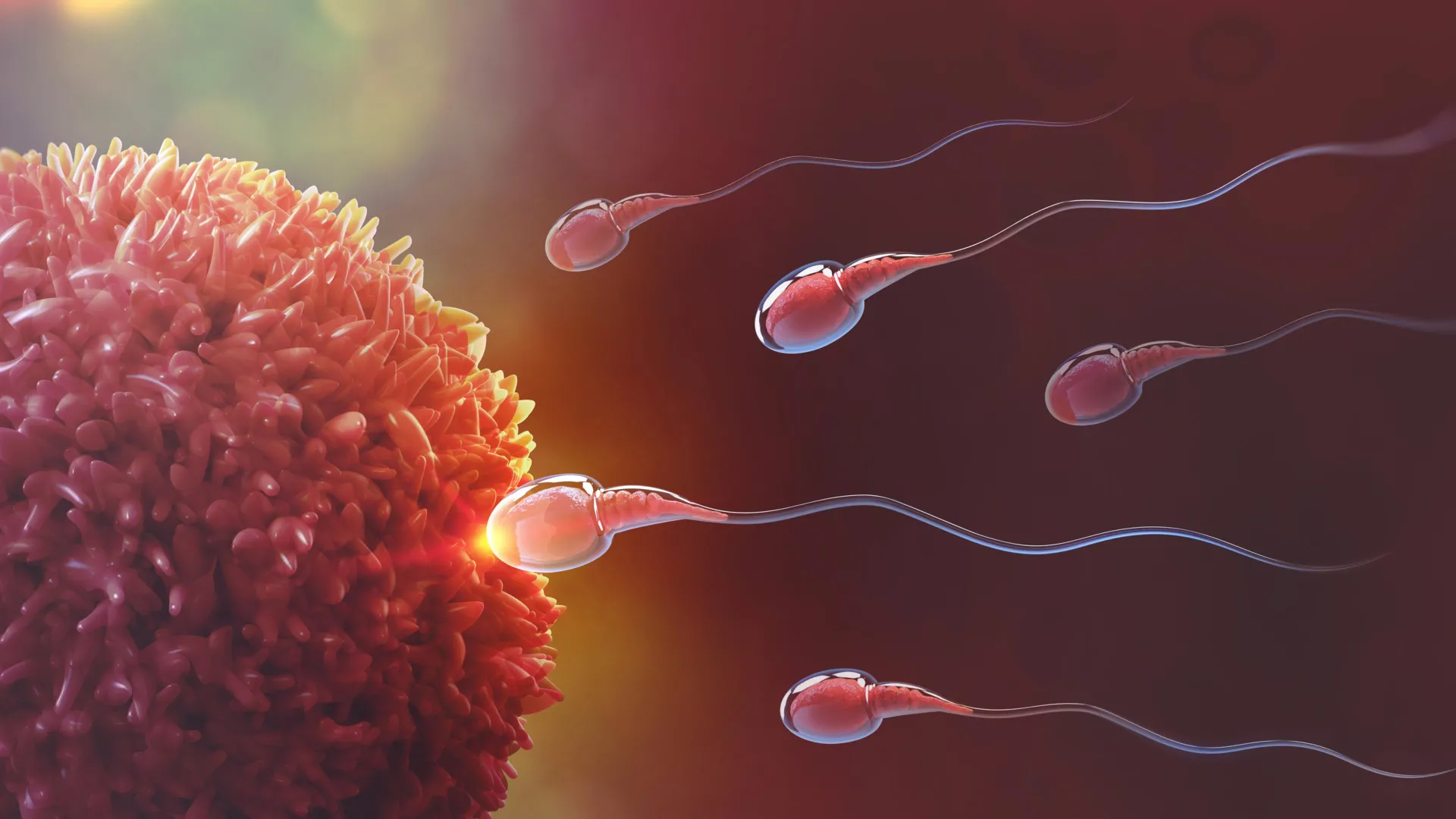
Evolutionary biologists from Syracuse University, the University of Siena, and the University of Szeged have found that sperm cooperation is a widespread and recurrent strategy among arthropods, the group that includes insects, spiders, crustaceans, and centipedes. The study, published in Nature Communications, analyzed sperm structures across hundreds of species and mapped those traits onto an evolutionary tree spanning roughly 600 million years.
The phenomenon, known as sperm conjugation, involves sperm cells joining into organized groups or structures, often aided by a membrane-enclosed substance called sperm-associated material (SAM). Rather than racing individually toward an egg, conjugated sperm may gain advantages in mobility, organization, or transport through the complex female reproductive tract.
The researchers discovered that the common ancestor of all insects possessed conjugated sperm, and that the trait has been gained and lost many times independently across different arthropod lineages. Lead author R. Antonio Gomez, a postdoctoral scholar at Syracuse University, said evolution has effectively run the same experiment repeatedly, allowing scientists to observe when cooperation emerges, disappears, and reappears under varying conditions.
Senior author Scott Pitnick, Weeden Professor of Biology at Syracuse University, noted that sperm are the most rapidly evolving cell type, shaped by the challenge of operating outside the body within the female reproductive environment. Co-author Steve Dorus, professor of biology at Syracuse, said the findings call into question long-standing assumptions that fertilization is solely a contest among isolated sperm.
Beyond evolutionary biology, the research may inform fertility studies by highlighting how group behavior and shared structures influence reproductive outcomes. The team also suggests that disrupting sperm conjugation or SAM could offer a targeted approach for pest control, citing the invasive spotted lanternfly as a candidate. That species lacks conjugation but encases each sperm in a thick layer of SAM whose function remains unknown.
The study acknowledges that the specific benefits and costs of sperm cooperation are not yet confirmed. Observing sperm groups inside actual reproductive tracts, rather than on glass slides, is a priority for future work. Researchers also aim to determine whether cooperation improves movement, molecule transport, or other functions.
Dorus emphasized that cooperation and competition are not mutually exclusive forces; they can operate together even at the microscopic level. The recurring appearance of similar cooperative solutions across vast evolutionary timescales suggests that teamwork can be as important as competition in shaping biological success.
Forget the sperm race: Fertilization may depend on teamwork
This is an independent summary. The complete reporting, supporting context and any primary documents remain with ScienceDaily.