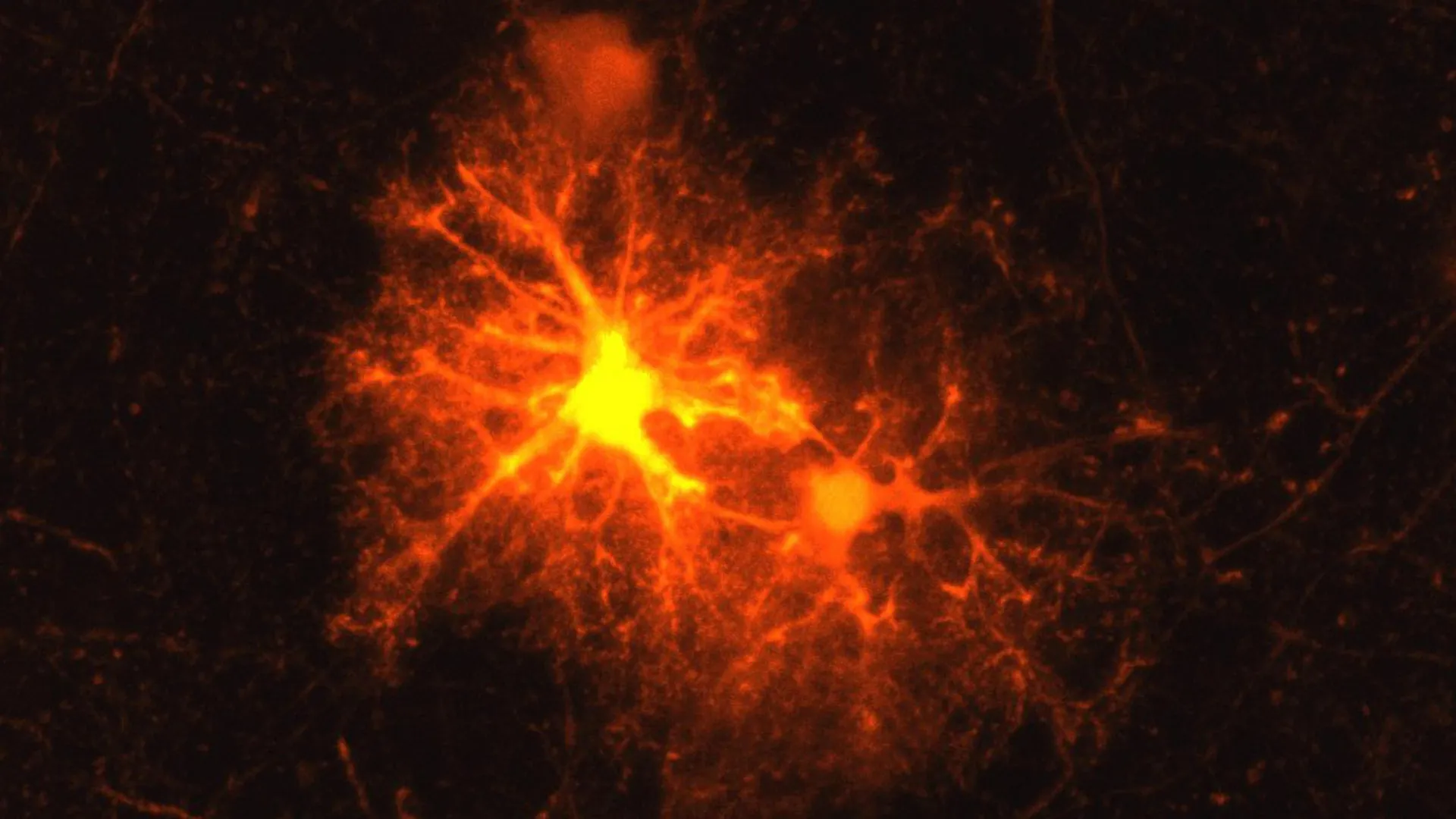
Scientists at the Max Planck Institute of Psychiatry have discovered that oligodendrocyte precursor cells (OPCs) produce the stress hormone corticotropin-releasing hormone (CRH) shortly after brain injury in mice. OPCs are cells that can mature into oligodendrocytes, which build the myelin sheaths insulating nerve fibers. Myelin damage occurs in conditions such as multiple sclerosis and after physical trauma, and restoring it is essential for neural function.
Using a mouse model, master's student Clemens Ries identified OPCs as the primary cells responding to experimental brain lesions. The cells proliferated rapidly at wound edges, and roughly one-third began expressing CRH within hours of injury. This CRH burst lasted about three days before shutting down, suggesting a specific role in the early repair phase.
The team found that CRH acts through its receptor CRHR1, which is present on a separate population of OPCs. When CRHR1 was genetically removed, OPCs multiplied faster after injury but ultimately produced fewer mature oligodendrocytes. The results indicate that CRH signaling restrains premature differentiation, ensuring enough precursor cells mature at the right time to rebuild myelin effectively.
The same receptor also shapes normal brain development. Mice lacking CRHR1 generated more OPCs during early postnatal life, leading to lasting changes in myelin structure. In adulthood, these mice showed thicker myelin sheaths, especially around thin axons, demonstrating that CRH signaling helps set baseline myelination patterns.
During development, the source of CRH may differ from the injury context. The researchers hypothesize that neurons release CRH to guide OPC behavior as the brain matures. Neurons are known to secrete CRH during stress, and early-life stress is a recognized risk factor for psychiatric disorders.
Jan Deussing, the research group leader, speculates that the CRH system in OPCs could play a larger role in stress-associated conditions such as depression than previously understood. If confirmed, this pathway might offer new therapeutic targets for disorders involving myelin and stress.
The study was published in Cell Reports and involved collaboration across multiple institutions. The findings are based on mouse models, and the extent to which they translate to human biology remains to be determined.
Future work will test whether manipulating CRH signaling can improve myelin repair in disease models and clarify the neuron-OPC communication during development.
A stress hormone may help the brain repair itself
This is an independent summary. The complete reporting, supporting context and any primary documents remain with ScienceDaily.