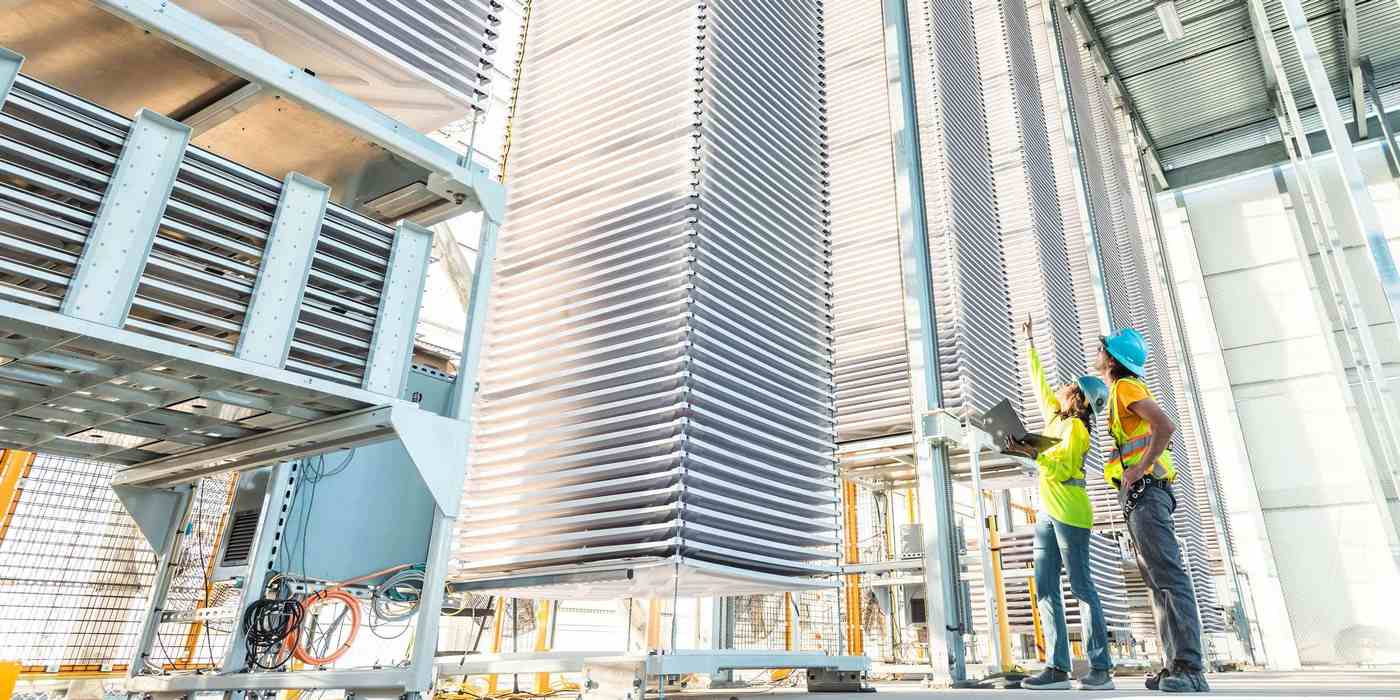
Researchers at ETH Zurich have published a prospective life-cycle analysis showing that cement production could become a net remover of atmospheric carbon dioxide if kilns are electrified and paired with direct air capture (DAC) technology. The study, led by PhD student Vittoria Bolognaro, modeled the integration of cement manufacturing with calcium-looping DAC systems developed by U.S. company Heirloom Carbon Technologies.
Cement production currently generates roughly 4 billion metric tons of CO2 annually, largely from the calcination of limestone and the fossil fuels burned to heat kilns. Calcium looping relies on the same chemical cycle: heating limestone to release CO2 and produce quicklime, which then absorbs CO2 from ambient air when hydrated, reforming limestone that can re-enter the cement process.
The analysis determined that running a cement kiln on electricity instead of fossil fuels could cancel out 78% of the kiln's direct carbon emissions. When the captured atmospheric CO2 is compressed and stored underground, the combined system achieves a net-negative carbon footprint over its full lifecycle.
The study tested three energy scenarios: the current U.S. grid mix, a heavily decarbonized wind-and-solar mix, and a fully autonomous photovoltaic-plus-battery system. Depending on the scenario, the efficiency of CO2 removal by 2050 ranges between 85% and 96%. The largest environmental footprint in all scenarios stems from the energy required to capture CO2 from the air.
Heirloom has operated a commercial-scale calcium-looping DAC plant in California since 2023 with a nominal capacity of 1,000 tons of CO2 per year. The company's operational data informed the ETH Zurich models, which represent the first prospective industrial-scale life-cycle analysis for this DAC method.
The authors emphasize several caveats. Key results depend on future electricity decarbonization through 2050, which is uncertain. Electric calcining kilns are not yet deployed at large industrial scale, and the study did not include a detailed cost analysis to assess economic viability.
Bolognaro characterized the findings as an important starting point that highlights the climate potential of combining cement production with DAC, pending further development of electric kiln technology and clean energy infrastructure.
Cement Kilns Could Become Carbon Negative if Run on Clean Energy as Limestone Absorbs CO2
This is an independent summary. The complete reporting, supporting context and any primary documents remain with Good News Network.