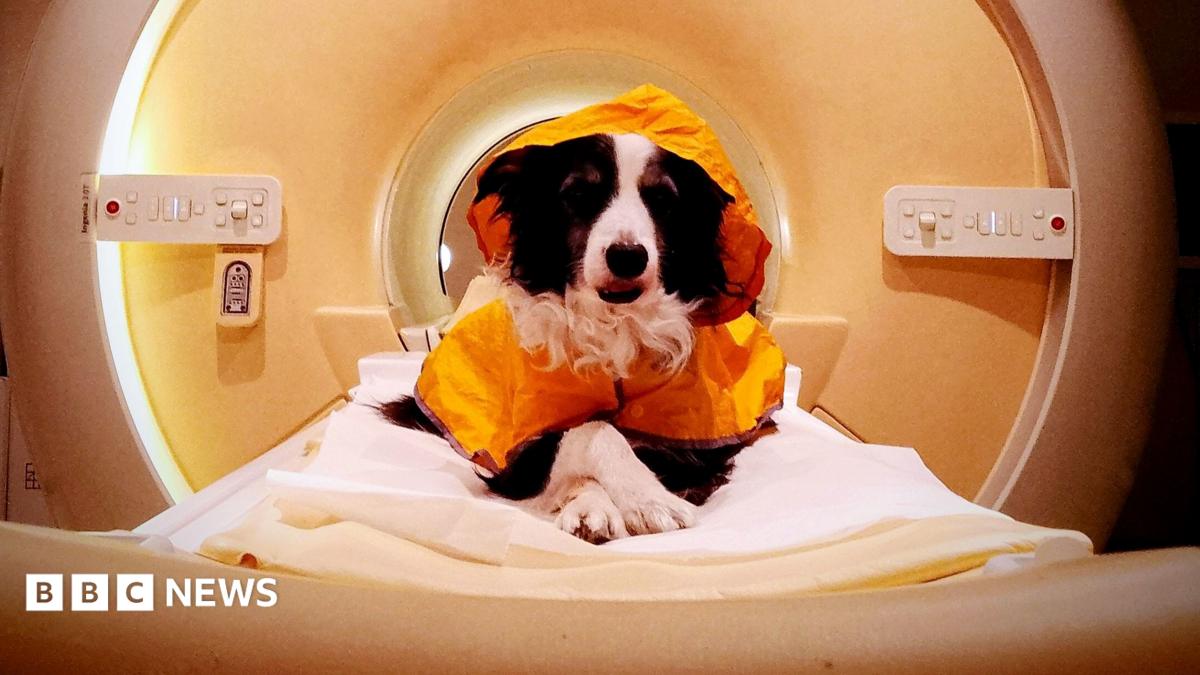
Researchers at the University of Vienna used functional MRI to scan the brains of 14 trained dogs while they viewed photographs of human faces displaying happiness, anger, fear, and sadness. The dogs, including the researchers' own border collies and others recruited from a local dog park, remained still in the scanner during the experiment.
When the dogs saw happy, smiling faces — even those of complete strangers — a brain region associated with reward processing showed increased activity. This same circuitry, known to drive motivation and anticipation of positive outcomes, has previously been observed activating when dogs expect a food treat or smell a familiar person.
The reward response did not occur for angry, fearful, or sad expressions. According to lead researcher Raúl Hernández-Pérez, dogs can distinguish positive emotions from negative ones but do not appear to differentiate among the various negative emotions tested.
Laura Cuaya, co-lead researcher, said the findings illustrate how thousands of years of domestication have molded canine brain circuitry to support social cooperation with humans. Unlike primates, which share a common ancestor with humans, dogs evolved along a separate path yet developed specialized abilities to understand human emotional cues.
The study, published in the journal iScience, adds to a growing body of work from the research team on how dogs process human language and behavior. Cuaya and Hernández-Pérez, who are partners in both research and life, have conducted multiple experiments involving their own dogs, Odín and Kun-kun.
The researchers suggest the results have practical implications for dog owners. Beyond food rewards, smiling at a dog — including unfamiliar dogs encountered in daily life — can serve as a social reward that reinforces positive interaction.
The experiment required dogs to be calm, well-trained, and of a size suitable for the scanner. Owners were approached in parks and invited to participate, with the dogs undergoing preparation to remain motionless during imaging.
We should smile at our dogs - a new scientific study reveals why
This is an independent summary. The complete reporting, supporting context and any primary documents remain with BBC News.