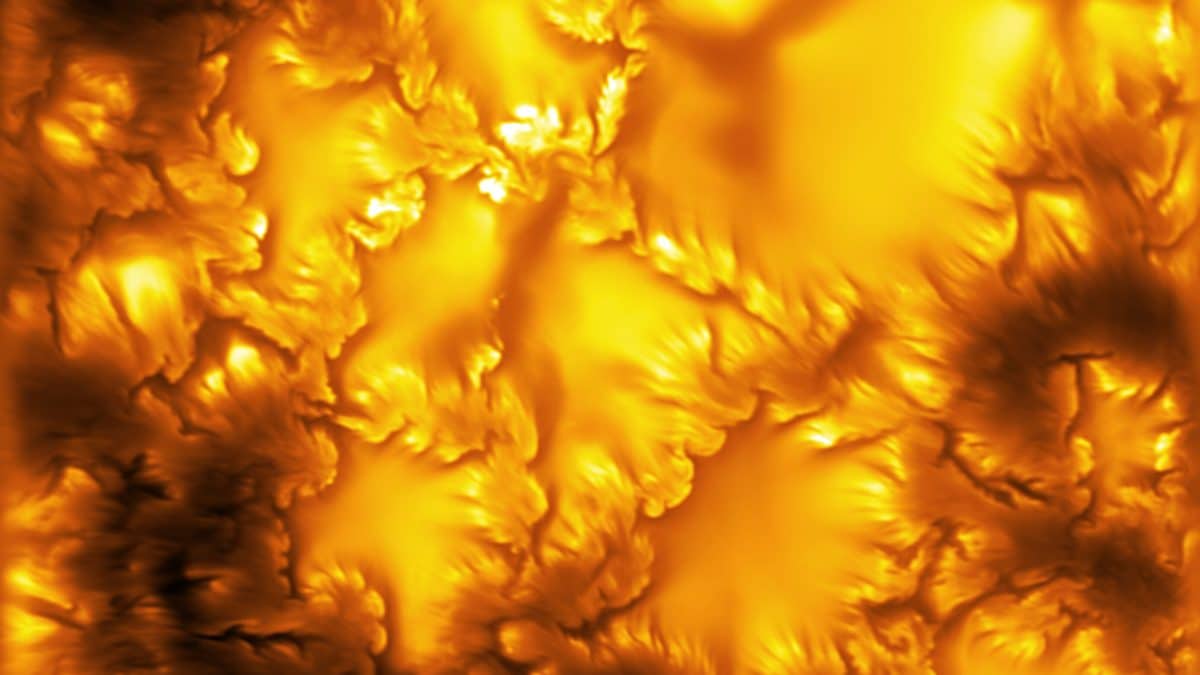
Scientists have reported the first direct observation of tiny plasma vortices on the surface of the Sun. These small-scale swirls had been predicted by theoretical models for decades but had not been seen until now.
The detection was made using high-resolution solar imaging instruments capable of resolving fine structures on the solar photosphere. The observed vortices are far smaller than previously documented solar features such as granules or supergranules.
According to the researchers, these plasma vortices appear to transport energy and mix magnetic fields in the Sun's lower atmosphere. This process could play a role in heating the solar corona and driving solar activity.
The findings provide observational support for long-standing theoretical work on magnetohydrodynamic turbulence at small scales. Until now, the existence of such vortices remained an unconfirmed prediction.
Further analysis will aim to quantify how much energy these vortices contribute to the overall solar energy budget. Researchers also plan to study their interaction with larger magnetic structures.
The discovery was published in a peer-reviewed solar physics journal. The research team includes scientists from multiple international solar observatories.
Observational limitations mean the smallest vortices may still be below current resolution limits. The authors note that future instruments could reveal even finer structures.
The work represents a step toward closing a gap between theoretical models of solar convection and actual measurements.
На поверхности Солнца впервые увидели плазменные вихри
This is an independent summary. The complete reporting, supporting context and any primary documents remain with Naked Science.