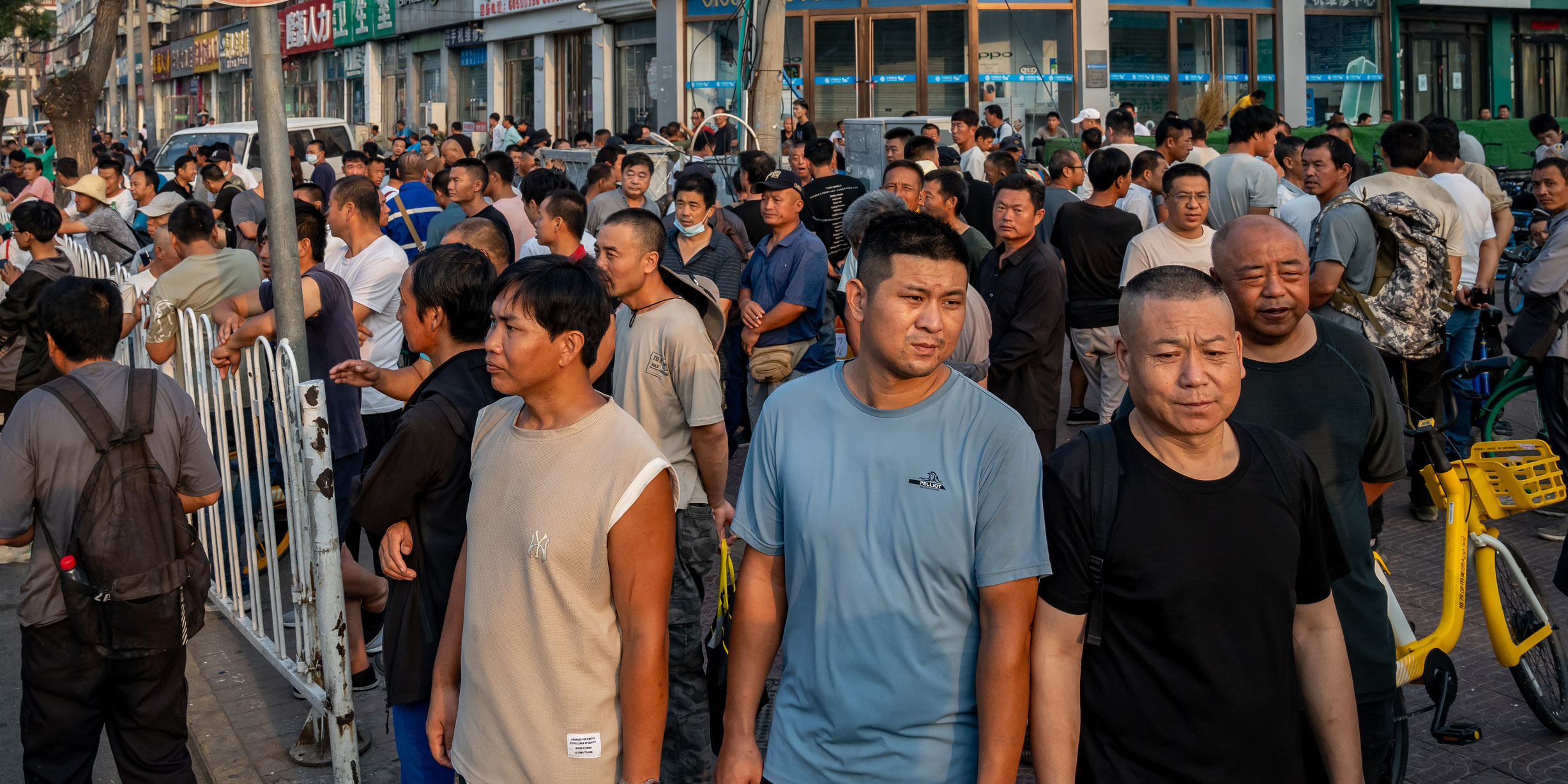
Tsinghua University political science doctoral student Cong Rui'an has published "Majuqiao Time: My Days as a Day Laborer" after spending eight years intermittently working in Majuqiao Town, one of Beijing's largest informal labor markets. Over more than 20 visits, Cong took jobs as a waiter, porter, parcel sorter, landscaper, factory worker, and in temporary security roles to understand the workers' experiences firsthand.
Cong contrasts Majuqiao with Shenzhen's former Sanhe labor market, noting key structural differences. Sanhe was centralized around large staffing agencies, making it easier to regulate and eventually shut down. Majuqiao operates as an urban village where hiring occurs on streets through dispersed small brokers, making it more flexible and harder to eliminate. The workforce also differs: Majuqiao skews older, with many farmers seeking off-season work, reflecting broader rural aging, while Beijing lacks the Pearl River Delta's concentration of small enterprises offering steady employment.
The research challenges common stereotypes about day laborers. Cong found workers are neither uniformly drifting nor purely heroic strivers. Many take genuine pride in their speed, strength, and skill, viewing the ability to work as a source of self-respect and social currency among peers. However, Cong emphasizes the heavy psychological toll of manual labor, noting that degrading treatment from supervisors creates mental exhaustion that persists beyond physical fatigue. Workers grow numb to hardship through adaptation, raising questions about societal expectations for dignity.
Cong approached workers as a fellow laborer, sometimes disclosing his student status. His introverted nature meant he rarely initiated conversations, but shared work created natural dialogue. Workers and brokers may have suspected his background, but generally did not pry, focused on the work at hand. Informal conversations during downtime yielded insights alongside formal research methods.
One vivid memory involves witnessing a violent street assault. After a brick attack left one man severely injured, bystanders — described as not typically gentle — instinctively drove away a dog sniffing at the blood. Cong reflects this was not nobility but basic human instinct, revealing shared humanity beneath different life circumstances. The injured man carried only a phone charger, underscoring material precarity.
Cong addresses criticism that his 20-plus visits over eight years constitute insufficient fieldwork, and that he may be exploiting workers' lives for academic gain. He acknowledges these concerns but argues rejecting such work would leave important stories untold. His engagement was continuous though quiet, following workers' group chats and recruitment posts between visits. Majuqiao became "an anchor" in his life, a place he knows by its smells, rhythms, and seasonal work patterns.
Cong maintains that complete understanding of another's experience is impossible, and he aims not to distort lives into commodities or spectacles. He wants readers to encounter workers as ordinary people deserving dignity, free from symbolic burden or moral judgment. While acknowledging the book's limited impact on Majuqiao itself, Cong hopes to use its social reach to amplify workers' often-unheard concerns and demands, not only for them but for working people broadly.
Love’s Labor’s Found: The Beijing Scholar Speaking Up for Hired Hands
This is an independent summary. The complete reporting, supporting context and any primary documents remain with Sixth Tone.