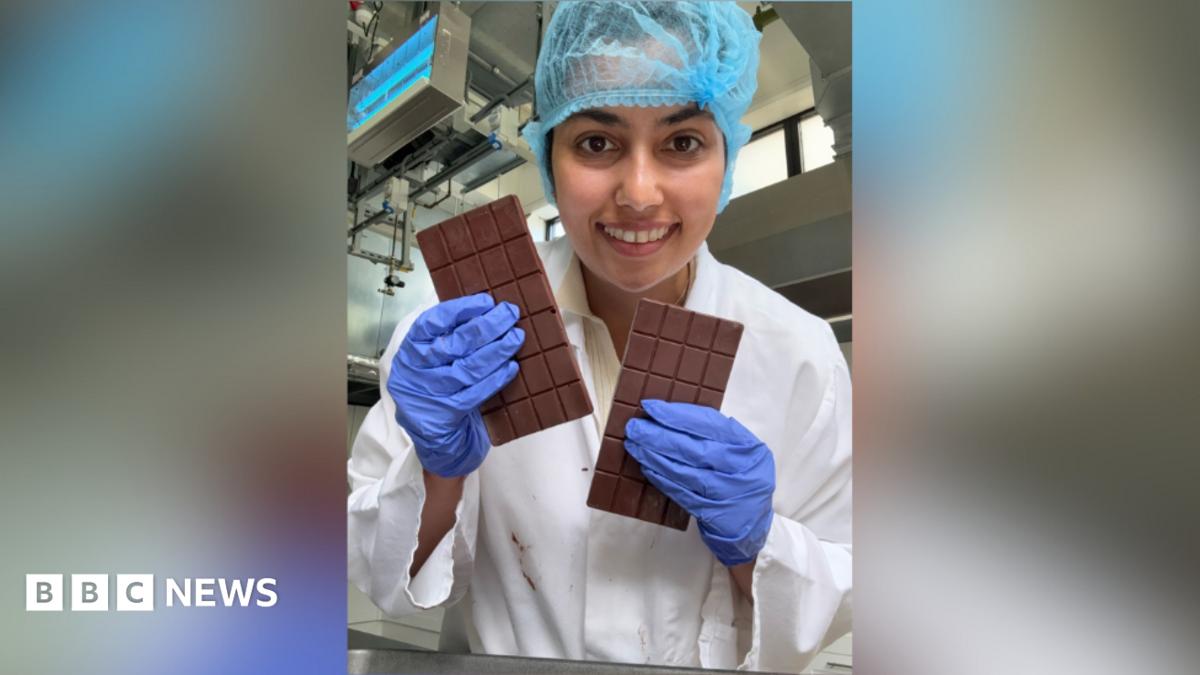
A chocolate bar made entirely from British ingredients has been produced at the University of Reading for the first time since 1932, when Rowntree's presented a similar bar to the then Princess Elizabeth. The Reading 100 Chocolate Bar was created to mark the university's centenary and uses cocoa grown at its International Cocoa Quarantine Centre in Berkshire.
Food security master's student Maha Khan harvested cocoa pods from the centre's collection of more than 300 cocoa plant varieties, removed the pulp and beans, fermented them for seven to ten days, and dried them in the sun. She then roasted, winnowed, ground and conched the beans before blending them with British milk and sugar at university facilities.
The UK chocolate market is worth £10.4 billion but relies completely on imported cocoa from tropical regions in Africa, South America and Asia. Khan said she undertook the project to draw attention to the challenges facing the global cocoa industry, including estimates that 30 to 40 percent of crops are lost to climate change, pests and diseases.
The International Cocoa Quarantine Centre acts as the primary hub for the transfer of cocoa genetic material, handling plants from 97 percent of cocoa-growing countries. New varieties are quarantined for two years to prevent the spread of pests and diseases before they are shared with breeding programmes worldwide.
Professor Carol Wagstaff, director of AgriFood Futures at the university, said the UK industry depends on a supply chain that starts thousands of miles away, underpinning millions of smallholder farmers in regions highly exposed to climate risks. She noted that while local production has benefits, international trade provides economic stability for producing communities and uses natural energy resources.
Wagstaff emphasised the need for continued investment in research to keep threats to cocoa production at bay. The quarantine centre's work supports the development of more resilient cocoa varieties that can withstand rising temperatures and emerging diseases.
Khan described the process as labour-intensive but said the recent heatwaves in the UK aided the drying stage. The bar is not intended for commercial sale but serves as a demonstration of what is possible and a reminder of the research underpinning the global chocolate supply.
The previous 100 percent British chocolate bar was a one-off gift made by Rowntree's in 1932 using cocoa grown in a heated greenhouse. The Reading project marks the first time the full bean-to-bar process has been completed domestically using cocoa from a dedicated research collection.
First 100% British chocolate bar made since 1932
This is an independent summary. The complete reporting, supporting context and any primary documents remain with BBC News.