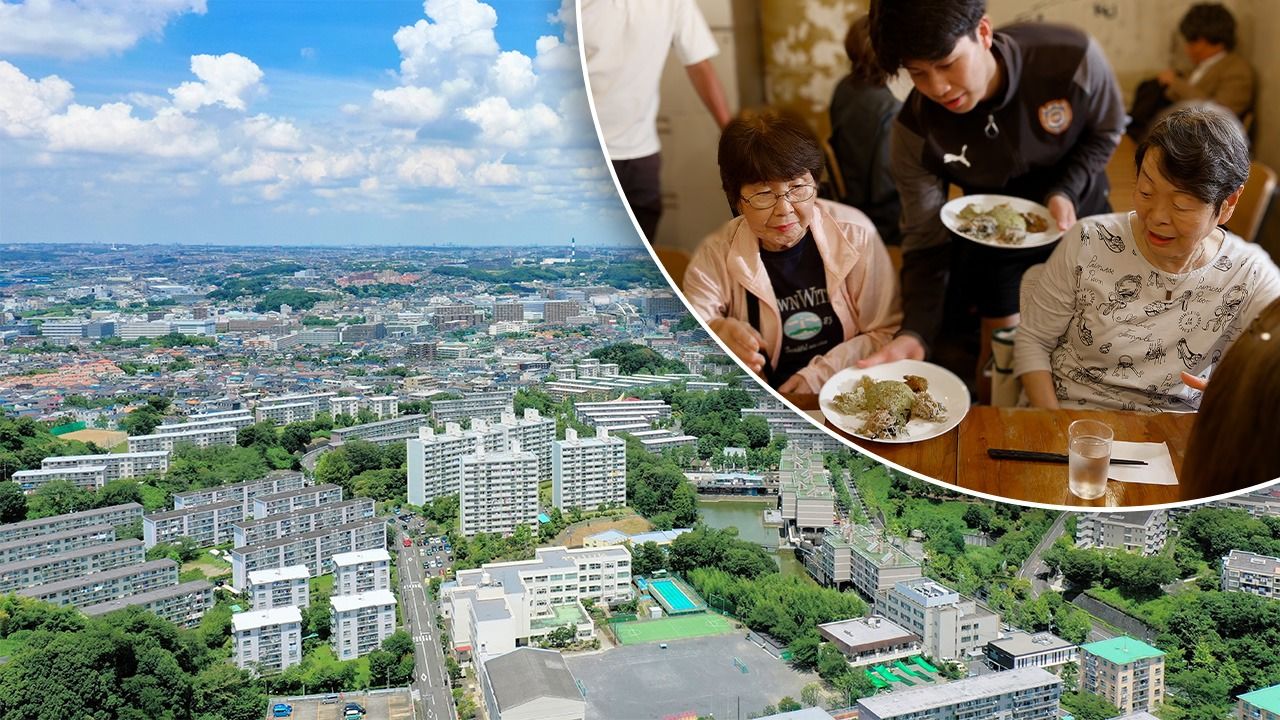
In Yokohama's Takeyama Danchi, a public housing complex built between 1968 and 1972, 47% of the 6,200 residents are now over 65. The population has fallen 37% from its 1995 peak of 9,800, leaving weakened community ties and cases of isolated deaths. In 2018, residents formed a planning group but struggled to implement solutions.
Around the same time, Kanagawa University soccer coach Ōmori Yūzaburō sought ways for his players to engage with social issues. Through a mutual friend, he connected with Mizukami Kōji of the Kanagawa Prefectural Housing Supply Corporation, which was redefining its role toward "danchi renewal." In 2020, the prefecture and university signed an agreement, and soccer team members began moving into the complex.
About 60 players now rent apartments in the danchi, living three to a unit. They staff Takeyama Central, a health facility opened in 2025 on a former bank site, where professional instructors and students lead calisthenics classes and operate equipment that measures blood-vessel age and muscle gain. The center has attracted over 440 members at ��4,400 per month, with 90% of a recent class of 35 participants being women.
Beyond the facility, players greet neighbors, join neighborhood association festivals, teach smartphone classes, tutor children, and serve meals at the Takeyama Kitchen dining hall using vegetables they grow at a nearby farm. Residents attended the team's Kantō university league final match in large numbers, and some now bring home-cooked food to the students.
Vice-captain Umigai Shunsuke, who chose the university partly for this project, says the experience has improved his communication skills and made the danchi feel like a hometown. Some teammates initially complained about cleaning duties or saw no relevance to soccer, but Umigai emphasizes becoming a better person regardless of career path. Coach Ōmori believes empathy and collaboration learned here serve players after graduation.
Neighborhood association chair Takahashi Akemi notes the danchi has become livelier, with residents bonding over conversations about the students. The project received a Yokohama City award for community building in 2026. While challenges of aging and single-person households persist, the integration of students has created gradual, measurable change in social cohesion.
Kanagawa Soccer Team Takes a New Field: University Squad Moves Into Elderly Yokohama Community
This is an independent summary. The complete reporting, supporting context and any primary documents remain with Nippon.com.