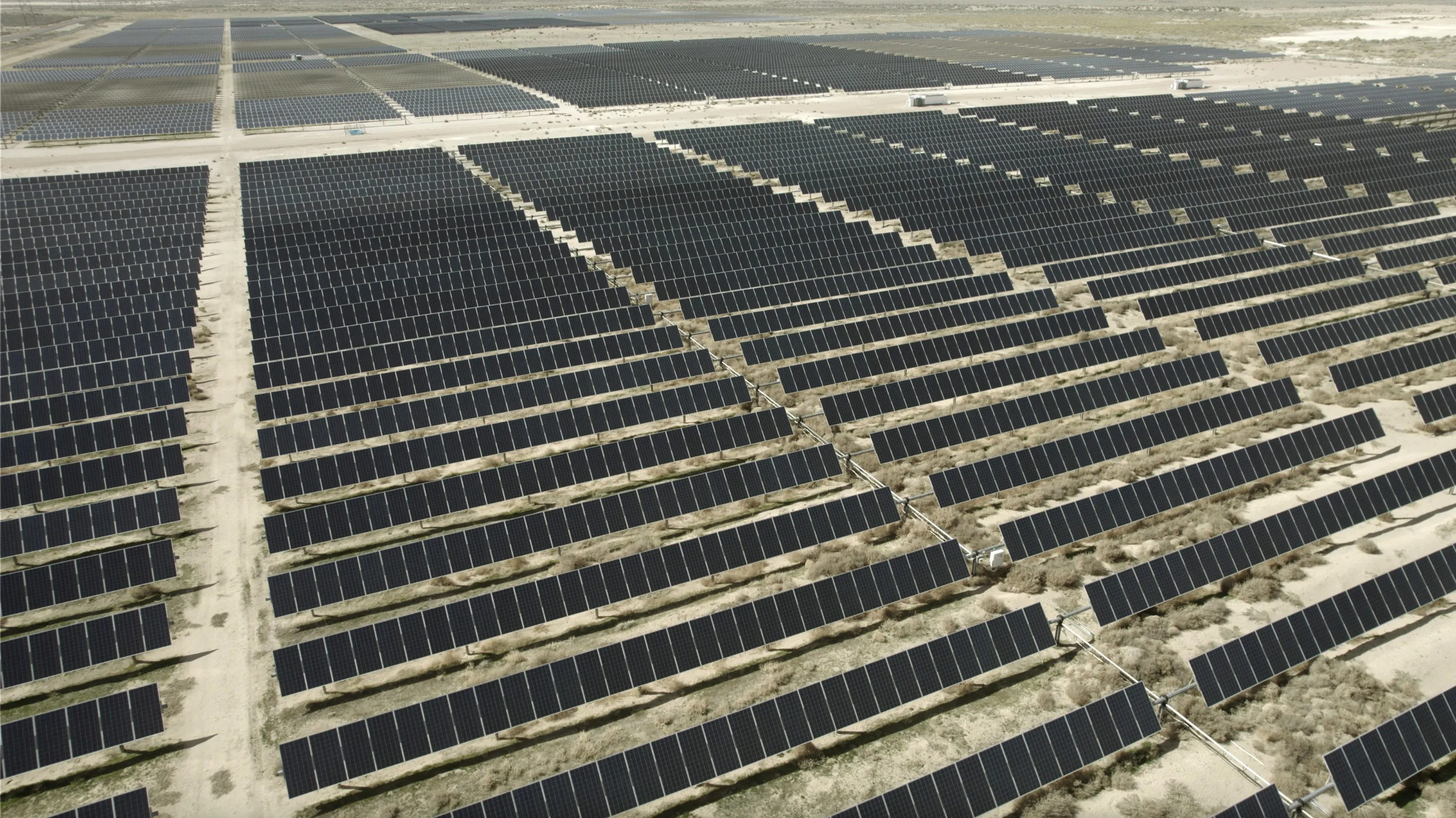
Utah generated more electricity from solar than from any other source in May 2026, marking the first time the state has reached that milestone. Photovoltaic panels produced nearly one terawatt-hour, representing roughly a third of total generation for the month, according to data from the energy think tank Ember.
Natural gas accounted for 32 percent of generation, coal for 28 percent, and wind for 2 percent during the same period. The shift reflects a years-long decline in coal dependence; in 2017 coal supplied between 64 and 78 percent of Utah's electricity depending on the month, but by spring 2026 it fell below one-third.
Several large projects came online recently. The 2,500-acre Green River Energy Center in central Utah began operating this spring with 400 megawatts of solar capacity and 400 megawatts of battery storage. Excelsior Energy Capital's Faraday Solar project in Utah County started delivering up to 685 megawatts to a Meta data center last fall, and the 80-megawatt Elektron Solar Project began serving Salt Lake City, Park City, and Summit County in June 2024.
Solar energy supports nearly 8,000 jobs in Utah across 132 companies, including 54 developers and 23 manufacturers, according to the Solar Energy Industries Association. Investors committed $1.5 billion to the state's solar market in 2025. By comparison, oil and gas extraction employed 1,291 people in 2025, coal mining 1,059 in 2023, and coal and petroleum product manufacturing 1,905 in 2025, per the U.S. Bureau of Labor Statistics.
Experts caution that solar will not consistently supply a third of Utah's power every month due to seasonal variation and grid complexity. However, the state's sunny, dry climate leaves substantial room for growth; California reached 51 percent solar generation in May 2026, according to Ember data.
Wind power also surged in the region. For the first time, wind exceeded all other sources in the portfolio of PacifiCorp — the parent company of Rocky Mountain Power — across Utah, Wyoming, and Idaho in December 2025 and January 2026, based on U.S. Energy Information Administration figures.
Nationally, about 51 percent of new utility-scale generation added to the grid in 2026 is expected to come from solar, with 43.4 gigawatts of solar, 24.3 gigawatts of battery storage, and 11.8 gigawatts of wind planned, compared to 6.3 gigawatts of natural gas and no new coal capacity, according to the U.S. Energy Information Administration.
In a first, Utah got more power from solar than any other source
This is an independent summary. The complete reporting, supporting context and any primary documents remain with Grist.