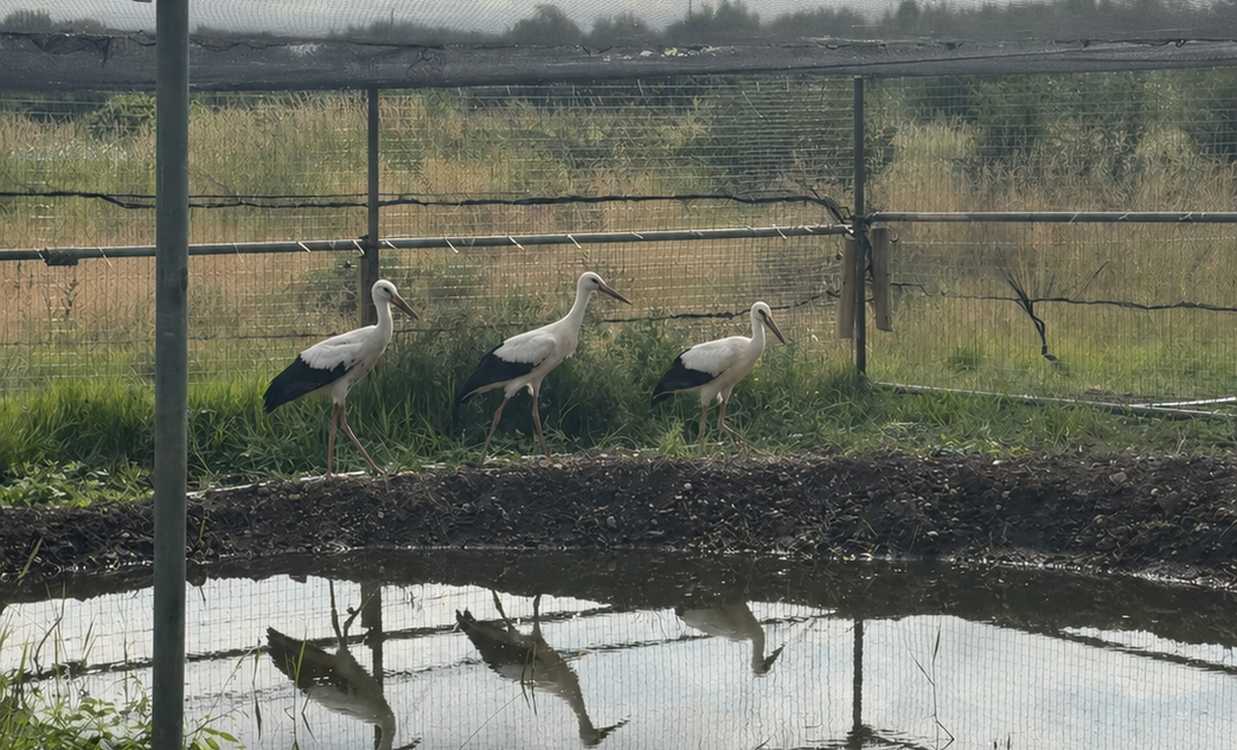
White storks have been reintroduced to the English Midlands for the first time in approximately 600 years, with birds released at the Willington Wetlands nature reserve in Derbyshire. The last recorded nesting in the area occurred during the reign of King Henry VI in the 15th century.
The Derbyshire Wildlife Trust manages the site, which lies along the River Trent. The reintroduction follows the earlier return of beavers to the same river corridor, a species absent for roughly 800 years since the era of the Magna Carta.
The storks arrived from a facility operated by Celtic Rewilding in nearby Staffordshire. They will first spend time in a predator-proof acclimation enclosure designed by the charity to familiarize themselves with the wetland habitat before a full release.
Funding of £300,000 for the translocation was provided by the Veolia Environmental Trust. The location was chosen partly because wild storks have been recorded flying over the River Trent recently, and conservationists hope the released birds will encourage those wild individuals to settle and breed.
Harvey Tweats, Director of Celtic Rewilding, said the Trent Valley is uniquely placed to support white stork recovery due to its extensive wetland habitats and restoration opportunities in former gravel pits. He noted that archaeological finds and place names around the Humber estuary also indicate the species' historical presence in the region.
Katie Last, Living Landscape Officer at Derbyshire Wildlife Trust, said the project aims to strengthen wetland habitats, enhance biodiversity, and inspire local communities to reconnect with nature. The initiative represents a step toward establishing a self-sustaining wild population.
The white stork is a large, migratory bird historically associated with wetlands across Europe. Its disappearance from Britain was driven by habitat loss and hunting. Reintroduction efforts elsewhere in the UK, such as the Knepp Estate in West Sussex, have shown that the species can breed successfully in restored lowland landscapes.
Success will be measured by whether the released birds survive, form pairs, and produce fledglings in subsequent years. The project adds to a broader pattern of wetland bird recoveries in England, including recent gains for species such as nightjars and spoonbills at other restoration sites.
White Storks Make Historic Return to the English Midlands After 600-year Absence
This is an independent summary. The complete reporting, supporting context and any primary documents remain with Good News Network.