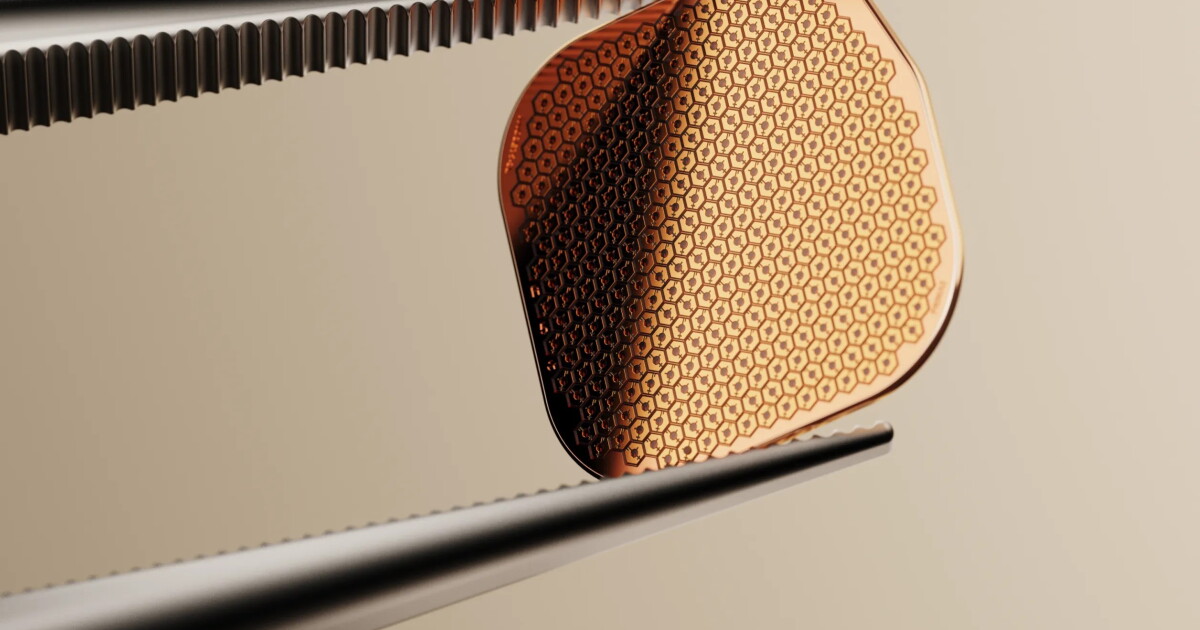
A wireless retinal implant designed to restore functional vision in people blinded by geographic atrophy has received CE marking, authorizing its sale across 30 European countries. The certification was issued under the European Union Medical Device Regulation following assessment by DEKRA, allowing manufacturer Science Corp. to move the PRIMA system from experimental status to commercial availability.
Geographic atrophy is an advanced form of dry age-related macular degeneration that progressively destroys photoreceptors in the macula, the central portion of the retina responsible for detailed vision. More than five million people worldwide are affected. Existing treatments can slow the disease in some patients but cannot restore dead photoreceptors, leaving a widening blind patch in the center of vision while peripheral sight often remains.
The PRIMA system bypasses the damaged photoreceptors by placing a 30-micrometer-thick, 2-by-2-millimeter chip beneath the retina. The chip contains 378 photovoltaic pixels that convert near-infrared light into electrical pulses, stimulating surviving retinal neurons. A camera on specialized glasses captures the visual scene, and an eye-facing projector transmits the processed image to the implant as invisible near-infrared light, providing both power and information without batteries or cables through the eye.
The pivotal PRIMAvera trial implanted the device in 38 patients at 17 sites across five countries. Thirty-two participants completed the 12-month visual assessment, and 26 of them — 81% — improved by at least 10 letters on a standard eye chart. After statistical adjustment for the six missing assessments, researchers estimated an overall response rate of 80%, with an average improvement of 25.5 letters, or just over five chart lines. Twenty-seven of the 32 participants reported reading letters, numbers, and words at home using the system.
Mean natural peripheral acuity remained roughly unchanged, indicating the implant did not degrade the patients' remaining side vision. An independent data-safety monitoring board concluded in November 2024 that benefits outweighed implantation risks and unanimously recommended submission for CE marking. Science Corp. formally applied in June 2025 and announced certification in July 2026.
The technology originated from research by Stanford ophthalmology professor Daniel Palanker in 2005. French company Pixium Vision developed PRIMA and conducted human trials before Science Corporation acquired the assets and three ongoing clinical studies in April 2024. The NEJM-published trial results formed the basis of the European regulatory submission.
Despite the CE mark, commercial rollout requires activating surgical centers, training medical teams, and securing reimbursement from national health systems or insurers. The first commercial implantation is expected soon in Germany. PRIMA remains investigational outside the European Economic Area. In the United States, the FDA has granted Breakthrough Device status and two Humanitarian Use Device designations — one for advanced geographic atrophy in both eyes and another for Stargardt disease — but these are not approvals, and a Humanitarian Device Exemption would still be required before U.S. sales.
Wireless retinal implant approved for sale across 30 countries
This is an independent summary. The complete reporting, supporting context and any primary documents remain with New Atlas.