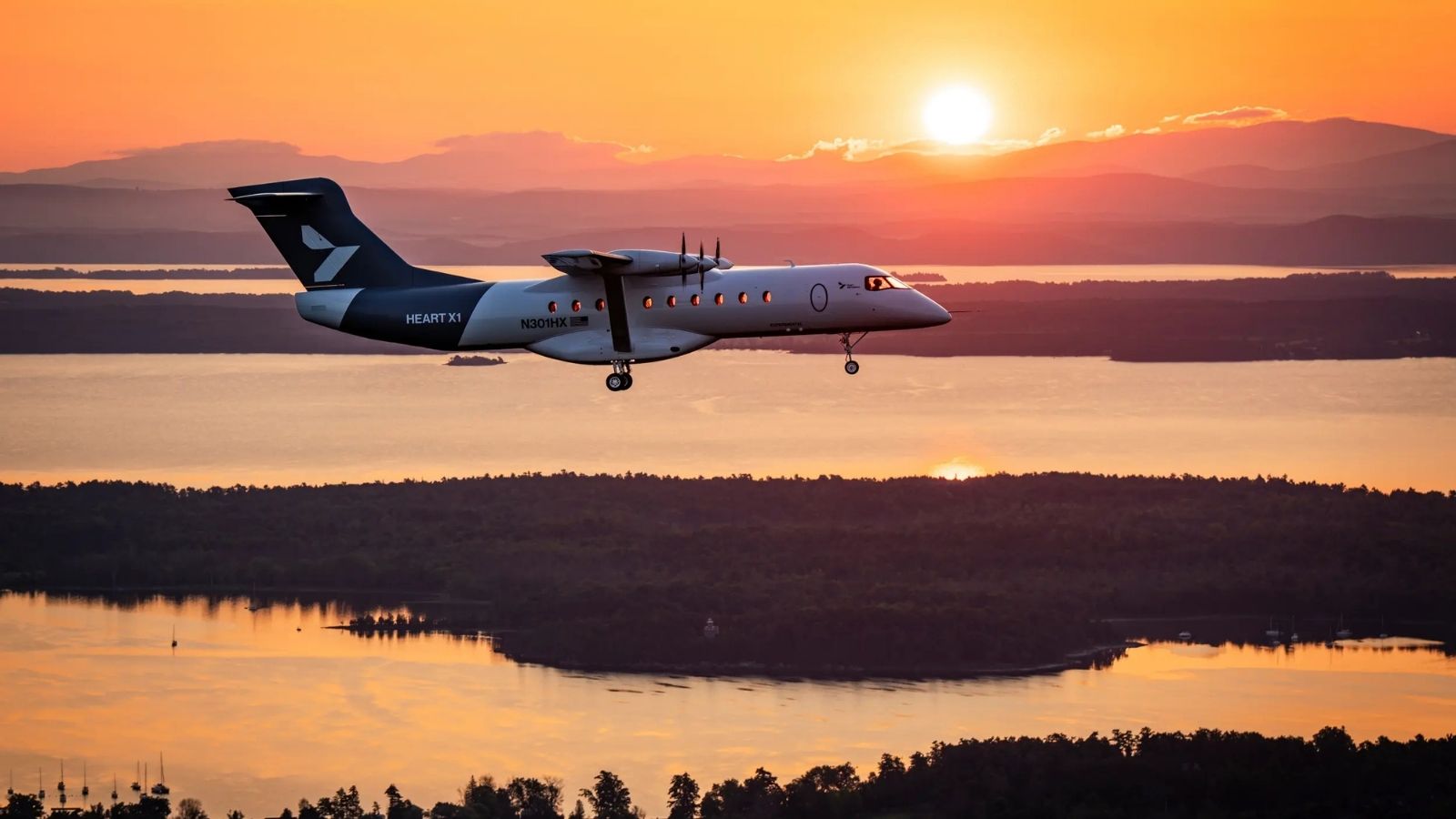
Swedish-founded company Heart Aerospace has completed the first flight of the X1, the world's largest fully battery-powered aircraft, at a regional airport in upstate New York. The 30-seat demonstrator has a 106-foot wingspan, measures 76 feet in length, and weighs more than 25,000 pounds. During the 27-minute test, the aircraft reached an altitude of about 1,100 feet with only a pilot on board, powered entirely by its batteries.
Heart Aerospace founder and CEO Anders Forslund described the flight as a demonstration that electric propulsion works at the scale of a commercial airliner. The X1 will not enter passenger service; instead, it serves as a testbed for technologies the company intends to incorporate into its planned commercial aircraft.
The company's primary commercial focus is the ES-30, a hybrid-electric regional aircraft expected to enter service by 2031. Airlines including United Airlines, Air Canada, and JSX have expressed interest in the aircraft. Heart estimates the ES-30 could be up to 40 percent cheaper to operate than conventional regional aircraft of similar size, though the company acknowledges that a test flight electricity cost of roughly $5 excludes crew, airport charges, maintenance, insurance, and long-term battery degradation.
The central challenge for fully electric aviation remains battery weight. Unlike conventional aircraft that become lighter as fuel burns off, batteries maintain roughly the same weight throughout a flight. This creates a trade-off where larger batteries add energy but also require more energy to lift their own weight. As a result, the X1 has a battery-only range of roughly 125 miles, insufficient for most regional commercial routes with required safety reserves.
Heart's solution combines batteries with a combustion engine that acts as a range extender. The ES-30 is designed to fly on battery power for part of a journey while the combustion engine provides additional range when needed. With this hybrid configuration, the aircraft is expected to achieve a maximum range of nearly 500 miles, making it better suited for short regional routes.
Several other companies are also developing electric aircraft. Rolls-Royce has built a small fully electric aircraft for high-speed flight, Harbour Air has tested an electric six-seat seaplane, and Joby Aviation and Archer Aviation are working on electric vertical take-off and landing aircraft for shorter trips.
The X1's successful flight demonstrates that battery-electric propulsion can scale to larger airframes, but it does not mean passengers will soon board fully electric airliners for long journeys. For now, hybrid-electric aircraft appear to offer a more realistic path toward introducing electric propulsion in commercial aviation while battery technology continues to develop.
World’s largest electric aircraft completes first flight: What it means
This is an independent summary. The complete reporting, supporting context and any primary documents remain with The Indian Express Technology.